


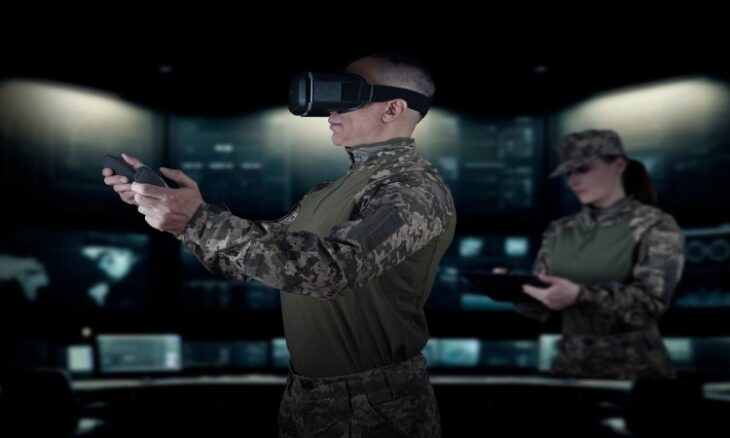
Air Force Expands Virtual Reality Refuelling Training
Air Force Operational Energy has funded the expansion of advanced virtual reality training systems to eight operational bases across the United States. The expansion includes the Experiential Air Refuelling Lightweight simulator, known as EARL, which brings air refuelling practice directly to operational squadrons. The system is intended to strengthen aircrew readiness and Agile Combat Employment capabilities while saving flight hours and thousands of gallons of fuel.
Air refuelling is among the most demanding flight competencies across mobility and bomber fleets. Maintaining proficiency has traditionally required tens of thousands of pounds of fuel per sortie. It has also required access to scarce tanker aircraft or bookings in limited full-motion simulator sessions. Those simulators are bulky, cost millions of dollars and are often located far from operational units.
Industry partner Specular Theory developed EARL. Its deployable footprint is roughly the size of an exercise bike. The system provides high-fidelity receiver-pilot air refuelling rehearsal through realistic force-feedback flight controls, computational fluid dynamics flight models and super-intelligence-guided instruction.
The expansion forms part of the Department of the Air Force’s effort to prioritise energy efficiency and operational training readiness during periods of high operational tempo. Moving repetitive proficiency rehearsals into squadron-level trainers reduces pressure on the tanker fleet and helps conserve fuel and flight hours.
Training results have been recorded at the B-52 Stratofortress Formal Training Unit at Barksdale Air Force Base in Louisiana. Student pilots who completed structured EARL training achieved proficiency with an average of 1.7 fewer aircraft sorties and 39 fewer minutes of flight time. On the KC-46A Pegasus, EARL and Mobile Aircrew Task Trainers directly accounted for fuel savings of more than 2.7 million gallons in 2024.
Instructors are reinvesting the saved flight hours and fuel savings directly into combat sorties. These include tactical weapons employment, low-level flying and austere landings. Similar energy and capacity milestones have been recorded across the mobility enterprise.
Traditional full-flight simulators are fixed equipment based at large, centralised hubs. EARL and companion systems, including the Boom Air Refuelling Trainer (BART), can instead be packed and deployed downrange with aircrews.
Connected multi-crew network capabilities also allow receiver pilots and boom operators using BART to conduct synchronised joint refuelling missions from different installations in real time. The networked exercises replicate complex procedures for operating in contested airspace before aircraft leave the ramp.
The most recent EARL launch took place at Travis Air Force Base in California, where the system was integrated into the 21st Airlift Squadron.
The rollout spans eight operational wings and commands, including Air Mobility Command, Air Force Global Strike Command and Air Force Reserve Command. The trainers have been fielded at Travis Air Force Base; Joint Base Lewis-McChord in Washington; Joint Base Elmendorf-Richardson in Alaska; and Joint Base McGuire-Dix-Lakehurst in New Jersey. Other locations include Dover Air Force Base in Delaware; Joint Base Lindsey Graham in South Carolina; Barksdale Air Force Base in Louisiana; and Minot Air Force Base in North Dakota.
SAF/IEN and major command partners are examining further software expansions for portable trainers. These include short-field assault landings, austere takeoffs, and tactical airdrop operations.