

ClassVR Launches EduverseSTEM for Secondary STEM Learning
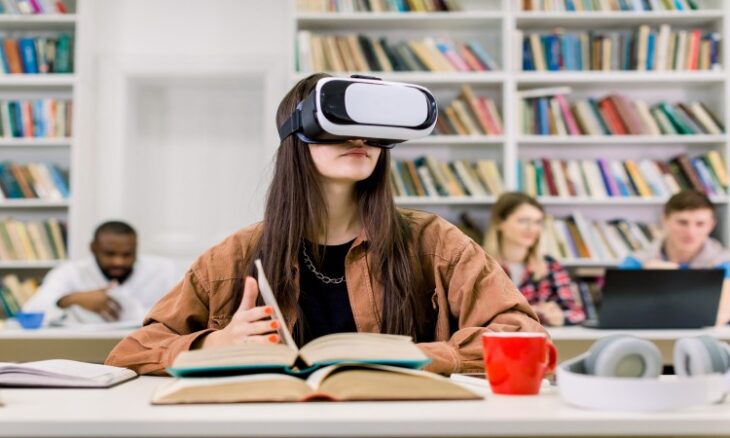
Avantis Education will launch EduverseSTEM in August 2026, bringing an immersive STEM learning system to secondary schools through its ClassVR platform. The system combines ClassVR Xcelerate headsets, curriculum-aligned content, classroom management tools and teaching resources.
The launch comes as schools seek to provide students with more practical experiences in Science, Technology, Engineering and Mathematics (STEM). STEM occupations are growing at twice the rate of non-STEM jobs in Australia, underscoring the need to prepare students for careers in science and technology-related fields.
Australia’s former Chief Scientist, Dr Alan Finkel AO, has highlighted the contributions of STEM-trained Australians to areas including electricity demand and generation, climate change adaptation, the application of artificial intelligence into society and healthcare for ageing populations.
Providing practical STEM education can be difficult for schools. Specialist equipment can be costly, while complex safety procedures can limit what students can do in a classroom or laboratory. Access to real-world environments can also be difficult for schools to arrange.
Australian schools have increasingly used Avantis Education’s ClassVR products for education-specific hardware, content and classroom support. EduverseSTEM is the company’s latest offering for secondary STEM education, designed as a ready-to-teach immersive ecosystem.
The system allows secondary students to explore, experiment and solve real-world STEM challenges through interactive virtual experiences. These activities are powered by ClassVR Xcelerate, which provides six degrees of freedom (6DoF).
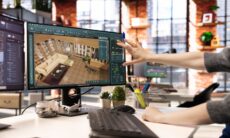
EduverseSTEM combines Xcelerate headsets with the ClassVR Portal, which provides classroom management functions. It also includes a comprehensive library of curriculum-aligned STEM content curated in collaboration with extended reality, or XR, content creators.
The system uses the Gold Standard Project-Based Learning framework to organise immersive experiences around authentic, real-world STEM challenges. It also includes teaching resources, training sessions for teachers and regular webinars to support classroom use.
A key difference between Xcelerate and ClassVR’s Xplorer headsets lies in how they track movement. Xplorer uses three degrees of freedom (3DoF), which track head rotation only. Students can turn and look in different directions, making the headset suited to immersive exploration and virtual field trips.
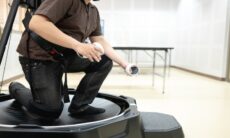
Xcelerate adds positional tracking through its 6DoF capability. Students can walk, crouch, lean and reach within a virtual environment. They can also manipulate objects using hand controllers.
The additional movement capability is intended for the more complex and applied learning undertaken by secondary students. In such activities, understanding can involve both doing and observing. The headset can support virtual experiences involving laboratory procedures, construction sites, equipment operation and workplace scenarios.
These experiences are intended to provide authentic, skills-based activities that can otherwise be difficult, expensive or impossible for schools to provide in physical settings. Such activities form part of the learning approach used by EduverseSTEM.
Xcelerate also has a 90-degree flip-up visor. The design allows students to move between a virtual experience and face-to-face classroom collaboration. They can discuss ideas with classmates and follow teacher instructions without having to remove the headset completely.
The headset can also be used for rehearsal before students undertake activities in physical environments. Students can practise the steps of a chemistry experiment several times in VR before entering a laboratory. They can also explore hazardous industrial environments that a school could not realistically access.
The flip-up visor allows teachers to pause a virtual experience and move directly back to classroom discussion, instruction or practical work. This keeps the teacher involved in the learning process while allowing immersive technology to expand the experiences available to students.
Other Xcelerate features include precise spatial tracking and automatic boundary detection for quick setup. The headset has a lightweight and comfortable design for extended use. Secure charging and storage solutions have also been designed specifically for schools.
The technology is already being used in education internationally. At the University of Minho in Portugal, an educator recently conducted training for Master’s students in Computer Science Education. The training examined the pedagogical use of virtual reality and augmented reality in higher education.
The introduction of Xcelerate formed part of that training. The educator reported a strong reaction among the trainees while they explored the headset’s new features and resources, with participants showing visible interest in the device’s capabilities.
EduverseSTEM also focuses on skills developed through project-based learning. Students work in teams, divide responsibilities, justify decisions and present their outcomes to their peers.
The framework gives students opportunities to practise collaboration, communication, critical thinking, leadership and presentation skills while working on STEM challenges. The activities therefore combine STEM subject content with practical tasks that require students to work together, make decisions and communicate the results of their work.
Through EduverseSTEM and the Xcelerate headset, Avantis Education is bringing immersive experiences, curriculum-aligned content and project-based activities together within a secondary school STEM learning system.