


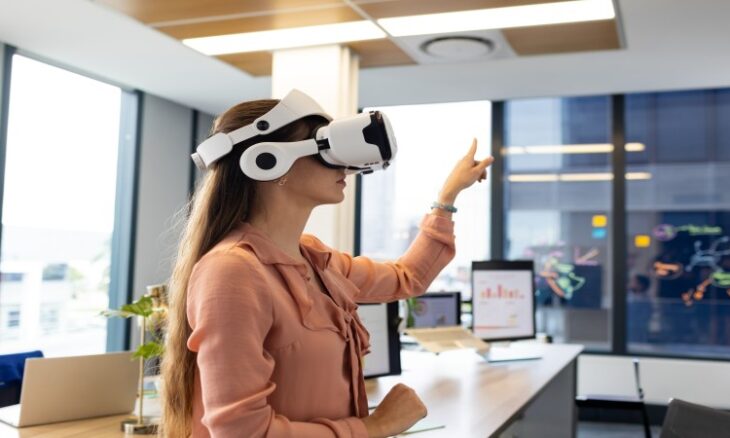
Meta Announces VR Glasses Launch for Spring 2027
Technology company Meta introduced its new virtual reality hardware, named Meta VR Glasses. The device is scheduled to become available to consumers in the spring of 2027 at a retail price of 1,299.99 US dollars. The hardware functions as a multipurpose platform designed for media consumption, professional work, and video gaming. Users can operate the device in environments such as aeroplanes or private workspaces while remaining aware of their physical surroundings.
The new hardware adopts a form factor similar to standard spectacles and weighs approximately 100g. This physical design makes the device five times lighter than the previous Meta Quest 3 model. The weight reduction relies on a two-part system. The main glasses component handles the display and sensor functionalities. This section features a magnesium alloy construction designed to provide structural rigidity and manage heat dissipation. A separate unit, called a puck, houses the computing hardware, battery, and storage systems. This secondary unit connects to the glasses via an optical tether and is designed to be carried in a pocket or bag. The glasses feature open sides and a passthrough camera system, allowing users to stay aware of their immediate environment.
Visual output relies on a 5K display system utilising micro-OLED panels. The screens offer a resolution of 37 pixels per degree. Meta incorporated ultra-compact pancake lenses to maintain visual clarity within the restricted physical dimensions of the glasses frame. The visual system supports Dolby Vision technology for enhanced colour and contrast representation. The frames also include integrated spatial audio hardware that supports Dolby Atmos.
The glasses run on the Qualcomm Snapdragon Reality Elite processor. This component provides processing capabilities alongside efficient power consumption. The device battery is in the tethered external puck and provides up to three hours of continuous high-resolution media playback. The system supports 45-watt fast charging protocols. Operational control is managed entirely without physical controllers. Users navigate the interface through integrated artificial intelligence software embedded within the operating system. The system responds to voice commands, eye movements, and manual hand gestures.
Numerous media partnerships support the hardware launch. The Meta VR Glasses will launch as the first virtual reality device to carry IMAX Enhanced certification. This grants users access to films presented in the expanded IMAX aspect ratio. The company established an agreement with the Walt Disney Company to deliver three-dimensional content. Subscribers to the Disney Plus streaming service in selected countries will have access to three-dimensional versions of films such as Marvel’s The Avengers and Marvel Studios’ Black Panther by November. This integration includes themed virtual viewing environments based on cinematic locations like Tatooine, Avengers Tower, and the Scare Floor. With the hardware launch in the spring, users will access enhanced virtual reality versions of feature films, including Avengers: Infinity War and Star Wars: A New Hope, through a dedicated application called Disney Immersive Cinema by ILM.
Additional media partnerships include application support for streaming platforms such as Prime Video, YouTube, DIRECTV, AMC+, Crunchyroll, Plex, and Tubi. Networks including Peacock, HBO Max, and Paramount Plus will offer their respective three-dimensional media catalogues on a virtual reality platform for the first time. Users will be able to purchase or rent hundreds of films later this year on existing Meta Quest hardware in the US. Thousands of international titles, including properties from Lionsgate, will become available by the launch of the new glasses. Meta is also collaborating with director James Cameron and Lightstorm Vision to release initial three-dimensional versions of major film titles in 2027.
The platform integrates dedicated applications from major sporting organisations including the NBA, MLB, and ESPN. The partnership with ESPN will introduce immersive sports broadcasting featuring 8K resolution and 180-degree viewing angles, commencing with American college football. After the hardware launch, the platform will host over 100 immersive live sporting events annually, supported by agreements with MLB, NBC Sports, TNT Sports, and UFC. The company also funded original immersive productions. A programme titled Open Season featuring basketball player Draymond Green launches on 29 September. A three-dimensional concert film co-directed by Billie Eilish and James Cameron titled Hit Me Hard and Soft: The Tour will be available in November. A three-dimensional version of the upcoming Matthew Vaughn film Stuntnuts is scheduled for release next year. A dedicated National Geographic application, Beyond, will provide immersive wildlife content.
Beyond entertainment media, the device functions as a computing platform offering virtual workspace environments. The system lets users turn flat physical surfaces into virtual keyboards and touchpads. The hardware supports wireless and wired USB-C connections to both Mac and Windows personal computers. Users can run their existing operating systems within the virtual environment while staying visually connected to physical peripherals like keyboards and mobile phones through the passthrough cameras.
The platform’s gaming library includes over 75 gesture-controlled titles at launch. The device maintains full compatibility with the existing Meta Quest software library and Touch Plus controllers. The hardware supports external connections to handheld gaming consoles and allows users to stream titles via Xbox Cloud Gaming when paired with a Bluetooth gamepad.
The system also introduces holographic communication technology designed to generate photorealistic digital representations of users during video calls. This software tracks facial expressions in real time and integrates with standard communication applications, including WhatsApp and Zoom. The system projects the digital hologram to remote participants with spatial audio, regardless of the receiving party’s hardware.