


VR headsets bring hope and real-world skills to inmates
Jacob Smith has spent around 20 years in prison, yet he and other incarcerated men are still able to visit distant places and unfamiliar cities. The trips do not require travel documents or official permission to leave the facility. Instead, they happen through virtual reality headsets that play immersive high-definition footage designed to make the viewer feel present in another location.
Smith recently described his first experience using the technology, recalling how quickly the headset transported him to Thailand. The environment felt vivid and immediate, with scenery and movement that made the journey seem real. For inmates who have been confined for years, even a short virtual trip can feel like a major shift away from daily routine and limited surroundings.
The programme has been introduced by a Los Angeles County-based nonprofit organisation that is delivering virtual reality sessions in California prisons. While the experiences can offer brief relief from incarceration, the main aim is to prepare people for release by exposing them to scenarios they are likely to face outside prison walls. The organisers describe the technology as a practical tool, not just entertainment, and they present it as a method of building confidence, coping skills, and readiness for life after custody.
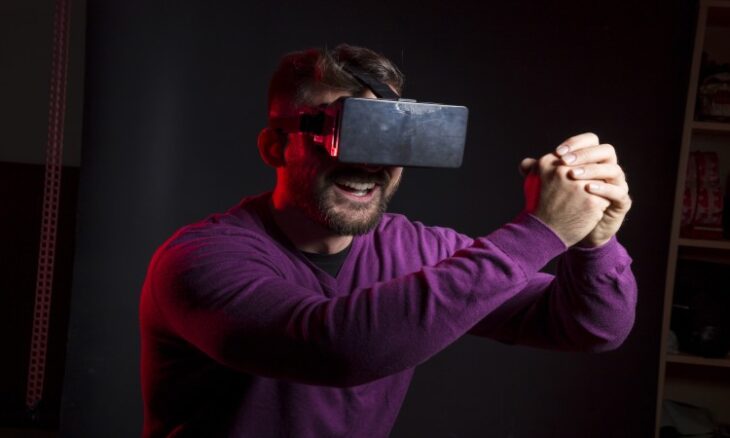
During a week-long programme held last month, incarcerated men at Valley State Prison in Chowchilla, located in California’s Central Valley, participated in scheduled VR sessions. They were seated on metal folding chairs in a shared area as staff and volunteers fitted headsets that resembled opaque goggles. Once the videos began, many participants shifted in their seats, turned their heads, and reacted visibly to what they were seeing, with expressions ranging from curiosity to surprise and quiet happiness.
The content varies depending on the goal of each session. Some participants watch travel experiences that take them to locations such as Bangkok, allowing them to explore streets, markets, and landmarks that are far beyond their current reach. Other sessions focus on practical situations, including job interviews, which are presented as structured simulations. In these scenes, inmates sit across from virtual interviewers who represent different styles and levels of difficulty, from supportive to challenging, to help participants practise handling pressure and answering questions clearly.
Smith, who is eligible for parole in 2031, now volunteers to support other inmates as they try the headsets for the first time. He has spoken about the anxiety many feel when facing modern employment systems after long periods away from the workforce. Application processes and expectations have changed, and for those who have spent years inside prison, the simple act of sitting in front of an interviewer can feel intimidating. The VR interviews are intended to reduce fear by providing repeat practice in a controlled setting where mistakes do not carry real-world consequences.
After each VR session, volunteers assist inmates in processing what they experienced. Organisers say the videos can trigger strong emotions, including grief, regret, and memories linked to past trauma. Sabra Williams, the founder of the nonprofit Creative Acts, refers to VR headsets as tools that create hope by allowing incarcerated people to picture a different future and rehearse the steps needed to reach it.
The programme developed out of an earlier prison arts initiative led by Williams, which involved theatre, music, poetry, dance, and painting. Observing inmates become committed to creative work encouraged her to explore further ways to connect people in custody with the wider world. Over time, she came to believe that bringing the outside world into prison could reduce the shock many face when re-entering society.
Williams also heard repeated concerns from people leaving prison who felt left behind by modern technology. Everyday tasks that most people take for granted, such as paying at a supermarket checkout, withdrawing cash from an ATM, or pumping petrol, were reported as confusing and stressful. According to the programme organisers, this confusion can lead former inmates to feel out of place and disconnected, reinforcing the belief that they belong only in prison environments.
At first, Creative Acts searched for videos online to replicate everyday experiences. Later, the organisation began producing its own VR footage. The content now spans travel, practical life situations, civic engagement, conflict resolution, arts exposure, and guided meditation. Organisers say the objective is to both broaden perspective and teach useful skills in a format that keeps participants engaged and emotionally present.
Experts say such technology could play a meaningful role in rehabilitation and reintegration. Nancy La Vigne, dean of the Rutgers-Newark School of Criminal Justice, has pointed to the potential for VR to help people practise navigating real-life systems such as the Department of Motor Vehicles or learning how to use public transport. She has also noted that VR content featuring nature may have a calming effect, referencing research reported by the American Psychological Association indicating reduced aggression and fewer disciplinary incidents among inmates who viewed short nature videos.
However, La Vigne has also raised concerns about cost and access. She has warned that limited availability could create tension between those who are able to participate and those who are left out, especially in environments already shaped by scarcity and strict control. The programme cannot simply distribute headsets widely, and it cannot function like a standard personal purchase within prison systems.
A former inmate, Richard Richard, first used a VR headset around six years ago when the programme was launched. Since his release, he has returned as a volunteer with Creative Acts and has said the technology has advanced significantly. He has described how inmates often move from initial amazement to deeper emotional responses as sessions encourage reflection and confrontation of difficult personal history. Volunteers say the sense of mental escape, even for a short time, can help participants feel more human and more connected to life beyond prison.
The organisation runs the programme using 100 Oculus headsets donated by Meta, delivering sessions in both general population settings and solitary confinement units. Youth offenders can also take part. It currently runs three times a year across four California prisons, with Williams seeking expansion throughout the state and eventually across the United States.
The California Department of Corrections and Rehabilitation has indicated support for approaches aimed at safer communities. In a recent statement, the department said it welcomes innovative methods that contribute to rehabilitation efforts. In a previous announcement introducing VR at the California Men’s Colony in San Luis Obispo County in August, the department said the technology could help address trauma, support emotional regulation, and assist with preparation for successful re-entry.
Organisers say one of the most impactful sessions is a short introductory VR trip to Thailand. Inmates who have rarely travelled beyond their neighbourhoods, and in some cases have never left their housing units, often react strongly. Volunteers report that many participants remove the headsets in tears, overwhelmed by the beauty of the landscapes and by the reminder that the world continues beyond prison walls.