

Penn State Quarterbacks Train in VR Lab at Beaver Stadium
Penn State’s quarterbacks now use a virtual reality system to build in-game experience for returning to Beaver Stadium, gaining targeted preparation during spring training.
The QB lab provides realistic digital practice in Beaver Stadium. Quarterbacks hone installed plays against specific defensive looks, sharpening skills critical for upcoming games.
Quarterbacks use the lab to replicate game scenarios without field time, gaining efficient, flexible practice to reinforce decision-making and execution.
Last season, Ethan Grunkemeyer, later the starter, used the system extensively as a backup. Teammates, including offensive linemen, noticed the volume of repetitions.
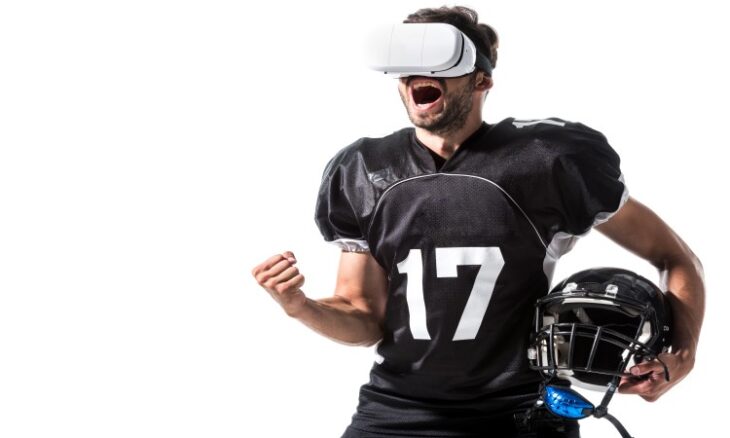
With headsets, players experience realistic Beaver Stadium scenarios, customising defences and conditions to practice decision-making from multiple perspectives.
Rocco Becht, recovering from injury, maintains his readiness with the VR system, which accelerates learning by allowing quick defensive recognition and reduced physical limitations.
Coaches review tracked VR reps to assess decision quality, providing quantifiable feedback that supports live practice performance evaluations.
Before joining live drills, transfer Connor Barry logged 300 – 400 VR reps, preparing to step in as Becht recovers and Manske remains sidelined.
Although similar VR systems appeared elsewhere, this marks the first sustained integration of immersive VR training in the Penn State quarterback program.
Freshmen Peyton Falzone and Kase Evans use the VR lab to familiarise themselves with college-level defensive schemes, thereby accelerating their adaptation.
The platform enables quarterbacks to accumulate extra, high-quality reps even when on-field time is limited, advancing game-readiness through simulated decision-making.