


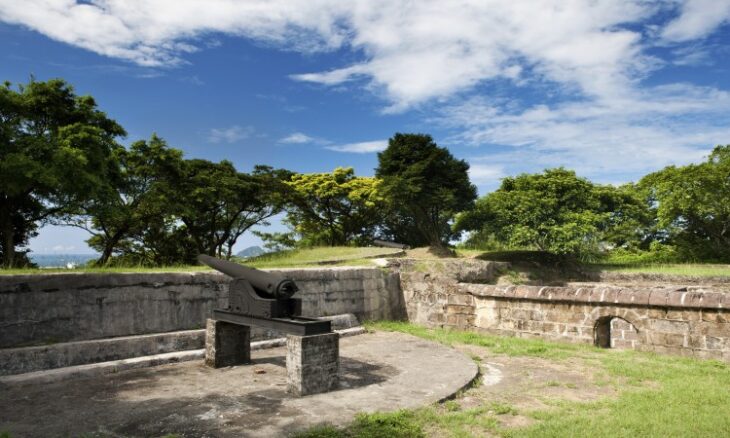
Taiwan recreates Keelung’s Gongziliao Fort in AR
National Taiwan Ocean University has digitally reconstructed a coastal cannon at Gongziliao Fort in Keelung through an augmented reality programme for educational purposes. The university announced the reconstruction on Thursday, providing a digital representation of a weapon associated with the historic coastal site.
On Wednesday, Associate Professor Chuang Yu-li of the university’s oceanic cultural creative programme invited students, faculty members and military enthusiasts to visit Gongziliao Fort. According to a university press release, the field trip was intended to help participants understand the fort’s history. The visit brought the group to the physical site, while the augmented reality programme offered a separate digital way to explore elements of its past.
Gongziliao Fort was part of a military garrison that protected the country’s northernmost shore. The garrison used a cannon that fired 28-centimetre cannonballs, while the fort also had an observatory and lookout posts. These features formed part of the coastal site’s facilities and provide the historical setting for the university’s digital work. The cannon is the main military feature recreated through the augmented reality system.
The augmented reality programme visually replicates the cannon and provides information about its functions and historical relevance. It uses a functional three-dimensional model that users can control. The digital representation presents the weapon as an interactive model rather than a fixed visual reconstruction, allowing users to examine it through several built-in controls.
The model allows users to rotate, adjust, and fire the cannon within the programme. These functions are part of the digital model itself and allow the weapon to be operated within the augmented reality environment. The system also provides details on the cannon’s functions and historical relevance, linking the interactive model to the fort’s history.
The augmented reality system extends beyond the cannon to the barracks. It displays the barracks with a full interior so students can examine the space where troops stationed at the fort lived. This representation provides an interior view of a part of the military site that would otherwise be difficult to examine through a simple visual representation. The barracks are therefore presented as a separate component of the digital reconstruction.
The digital structure also includes a repair option. Through that feature, users can see how the structure was constructed. The repair view adds another structural element, allowing the physical form of the site to be examined through the augmented reality programme rather than only through its existing remains.
The Japanese built Gongziliao Fort in 1904, and it remained in use for some time after 1945. The site has a war room, tunnels and a water reservoir. These features form part of the fort’s documented physical remains and provide the historical background for the university’s reconstruction. The cannon, barracks and structural repair function focus the digital experience on specific aspects of the site.
The Wednesday field trip and the Thursday announcement provide separate parts of the university’s activity around Gongziliao Fort. The field trip brought together students, faculty members, and military enthusiasts to visit the site. At the same time, the augmented reality programme offers an interactive representation of selected features linked to its military history. The project centres on the cannon but also incorporates the barracks interior and a view of how the structure was constructed.
The reconstructed cannon represents a weapon that fired 28-centimetre cannonballs at the coastal fort. In the augmented reality programme, users can rotate, adjust, and fire it as a functional three-dimensional model. The barracks are shown with a full interior, while the repair option allows users to see how the structure was constructed. The digital programme therefore represents several specific features described in connection with Gongziliao Fort while retaining the site’s historical setting.