


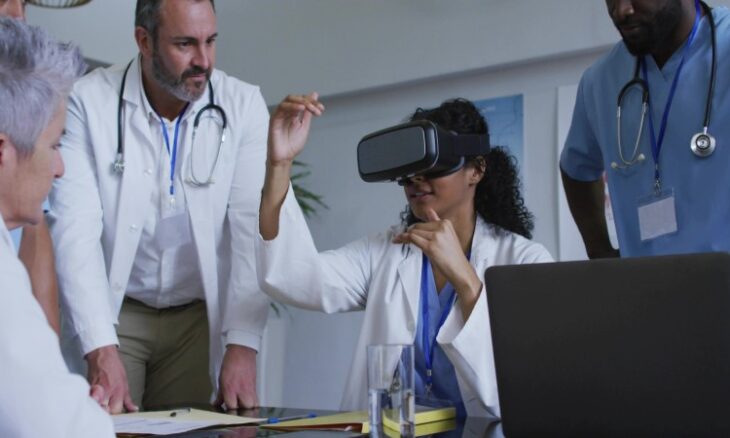
VR Perimetry Produces Results Similar to HVF Testing
Virtual reality perimetry may provide visual field measurements comparable to those obtained through Humphrey Visual Field testing while needing substantially less examination time in patients with ocular hypertension or glaucoma, according to a retrospective study.
Researchers at the Duke Eye Centre compared the VisuALL virtual reality perimetry platform with Humphrey Visual Field 24-2 testing in 79 eyes from 50 patients diagnosed with ocular hypertension, suspected glaucoma or glaucoma. The study assessed mean deviation, pattern standard deviation, testing duration, point-by-point sensitivity measurements, reliability indicators and patient preference.
The study group included eight eyes with ocular hypertension or suspected glaucoma, 24 eyes with mild glaucoma, 28 eyes with moderate glaucoma and 19 eyes with severe glaucoma. The mean age of participants was 72 years. All patients completed Humphrey Visual Field testing before undergoing virtual reality testing using the American Virtual Algorithm Fast protocol. Seven eyes were examined on separate days, with a mean interval of 12 days between the two tests.
Mean deviation measurements were similar between the two testing methods. Humphrey Visual Field testing recorded a mean deviation of -6.8 dB, whereas virtual reality perimetry recorded -6.0 dB. Pattern standard deviation measurements were also comparable, measuring 5.6 dB with Humphrey Visual Field testing and 6.3 dB with virtual reality testing.
The relationship between the two methods was reflected in correlation values of 0.82 for mean deviation and 0.85 for pattern standard deviation. These data indicated close agreement between the measurements generated by the two systems.
A substantial difference was observed in testing duration. Virtual reality perimetry required an average of 122 seconds, compared with 253 seconds for Humphrey Visual Field testing. Examination time during Humphrey Visual Field testing increased with advancing glaucoma severity.
Among patients with mild glaucoma, Humphrey Visual Field testing required an average of 197 seconds. In patients with severe glaucoma, the average duration increased to 317 seconds. In contrast, virtual reality testing times remained largely unchanged across disease stages. Average testing duration ranged from 121 seconds in mild glaucoma to 120 seconds in severe glaucoma.
A point-by-point assessment of visual field sensitivity did not identify systematic differences between the two devices. Mean sensitivity differences ranged from -0.4 dB to +3.1 dB across the tested visual field locations.
No individual testing location demonstrated a statistically significant difference between the two modalities. Variability between the platforms increased among patients with moderate and severe glaucoma. Despite this increase, overall mean threshold sensitivity remained similar.
The investigation also examined reliability measures. Among 18 eyes that showed fixation losses greater than 20% during Humphrey Visual Field testing, lower fixation loss rates were recorded with virtual reality perimetry. The study associated this outcome with continuous eye tracking and the platform’s dynamic testing matrix.
False-positive occurrences were also lower with virtual-reality testing in eyes with lower fixation losses during Humphrey Visual Field examinations. The results formed part of the comparison of reliability findings between the two testing approaches.
Patient preference strongly favoured the virtual reality platform. Of the 48 patients who completed both examinations, 41 preferred virtual reality perimetry, while seven reported no preference between the two methods. No participant preferred Humphrey Visual Field testing.
Several limitations were identified within the study. These included its retrospective design, modest sample size and single-centre setting. Humphrey Visual Field testing was always performed before virtual reality testing, making it impossible to exclude potential learning effects or fatigue effects related to testing order.
Additional limitations were linked to differences in the technologies used. The devices employed different luminance ranges and testing algorithms, limiting direct comparability of threshold sensitivity measurements. The study also did not assess longitudinal monitoring or test-retest repeatability.
The report stated that virtual reality perimetry could be used in glaucoma management, particularly in situations where access to a Humphrey Visual Field analyser is limited because of physical or operational constraints. The study also noted that glaucoma management depends on the ability to monitor disease progression. The report further stated that future studies assessing the ability of virtual reality perimetry to track visual field changes over longer periods would be important in determining its role as an adjunct tool for glaucoma monitoring and management.