


UT Dallas VR Lab Studies FAA Headset Training Uses
Inside a computer lab at The University of Texas at Dallas, Chris Gauthier BA’23 fits a black headset over his head, and a grey-tinted visor shields his eyes. He raises his right arm, extends his index finger and taps the air. He then lowers the same arm and repeats the movement at fixed points that are not visible to anyone else in the room.
Gauthier, a master’s degree candidate in game development at UT Dallas, is wearing a Microsoft HoloLens 2 virtual reality headset. He is not playing a video game. He is interacting with scenes he helped create as part of a five-year collaborative agreement between the university’s Virtual Reality, Augmented Reality, and Simulation Technology Lab and the Federal Aviation Administration.
The partnership with the FAA Civil Aerospace Medical Institute began in 2024 and involves five graduate and doctoral students in the Harry W. Bass Jr. School of Arts, Humanities, and Technology. The students are helping test virtual and augmented reality technology for workforce development in the aerospace industry. The work is intended to inform how technicians, air traffic controllers and other workers learn their roles and build their skills.
For the FAA, immersive technology could improve safety during training and reduce the space, money, and time needed for training. The project is also tied to the agency’s wider workforce needs.
Virtual reality is often associated with gaming, but it is also used in police training, medical settings and military environments. It has also been used to help older people combat loneliness and memory loss.
Jeff Price, an associate professor of game development and virtual reality in the Bass School, leads the VAST Lab. The group has built 3D environments for artistic and practical purposes, and in 2025 it won a gold medal for emerging technology in the Davey Awards for creating the UTD Vivarium Digital Twin, a virtual replica of the university’s animal research lab. Gauthier was one of 12 students recognised on that project.
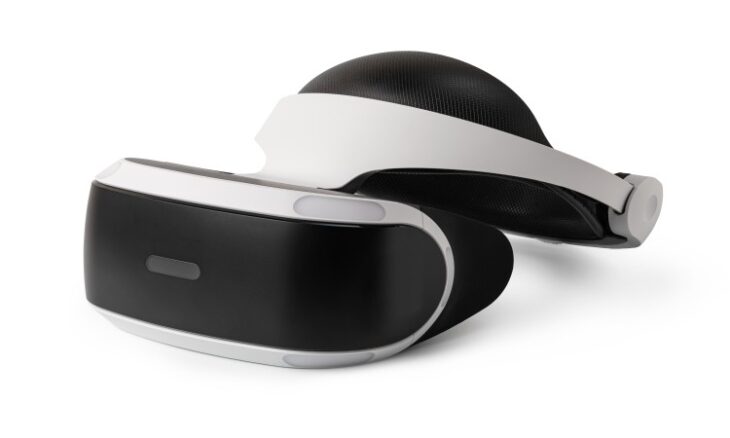
Price established a separate offshoot, the Virtual, Immersive, and Simulation Training in Aerospace Lab, known as the VISTA Lab, to focus on the FAA work. Students in the new lab are testing headsets, many of which resemble ski goggles, that place users inside virtual environments that precisely mirror specific locations.
Price is the principal investigator on the FAA project, and the lab is assessing how the devices wear and how accessible they are. The students are also checking comfort and whether the experience triggers motion sickness, dizziness or other symptoms. They will determine how much time users should spend wearing the headsets. When the work is complete, the findings will be presented to the FAA and later submitted to peer-reviewed research publications.
Price said simulation technology is useful when training space is limited because workers can learn off-site. He said it also gives users a place to practise skills safely. He described digital twins as a way of connecting people and experiences to actual-world practices.
Gauthier said he chose UT Dallas for his undergraduate studies after visiting the campus through an Explore Engineering Day event while he was in high school. He had been passionate about filmmaking since his teenage years and expected to use those skills in real-world settings. He did not expect that path to lead into virtual and augmented reality.
After a job prospect fell through following graduation, Gauthier returned to UT Dallas as a research assistant in the VAST Lab. Price encouraged him to obtain a master’s degree. Gauthier said that mentorship had been priceless and that virtual reality was unfamiliar to him before he joined the project.
He now designs the scenes that users see inside the headsets. He travelled to the FAA’s Oklahoma City training facility. He took hundreds of photographs to recreate equipment with so much precision that it is difficult to distinguish his design from the real thing. He said the project had given him highly specific knowledge across many different areas.
Brandon Coffey BA’23, another research assistant and master’s degree candidate in game development, also worked on the Davey Award-winning project. He chose UT Dallas to study animation and met Price through a virtual reality class. Coffey can quickly recall detailed specifications on the headsets being tested and is regarded as the lab’s technical backbone.
Price said Coffey often solves problems when the team gets stuck. For Coffey, the lab has offered a chance to see his art displayed publicly and to gain experience working on projects for clients.
Hamida Khatri, a research assistant and doctoral candidate in arts, technology and emerging communication, transferred from Harrisburg University of Science and Technology in Pennsylvania to UT Dallas to complete her PhD and focus on virtual reality applications in mental health. She was also recognised for the digital twin project. Khatri said she wanted to join a lab where she could use her research background and carry out user studies from the start.
She developed the research protocol for the FAA project after spending months reviewing earlier studies and planning the headset experiments. Khatri said the project had shown her how relationships can be built with companies, other organisations and other researchers, and that the work was providing real-world, hands-on experience through direct collaboration with the FAA.
Khatri also credited Price, who serves as examining committee co-chair for her PhD, with immersing her in the research experience she had been seeking. She said he had supported her personally and helped other students in the lab by giving them opportunities to work on projects.


