

USC Study Uses AI to Personalise Vibration Feedback
A University of Southern California research team has developed an AI system designed to personalise haptic vibration more efficiently, with possible uses in phones, games, vehicles and wellness tools. The work examines a familiar part of modern devices: the buzz on a phone, the alert in a car, or the feedback from a game controller. The researchers say those signals can carry different meanings for different people, which makes one-size-fits-all vibration libraries less reliable than designers might expect.
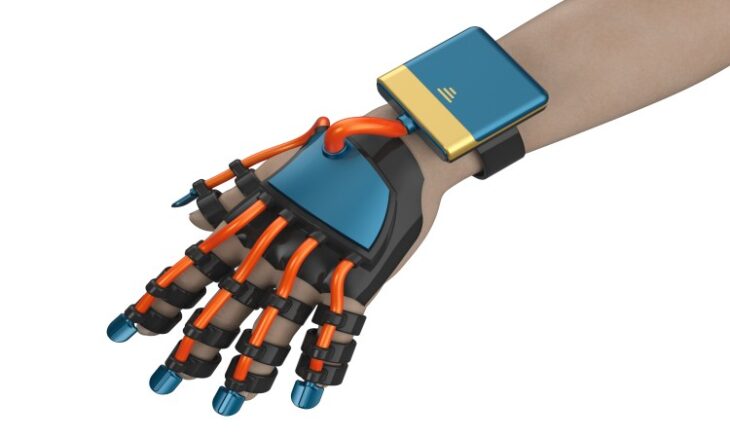
Haptic feedback uses touch to communicate information. It is now built into smartphones, wearables, gaming systems and virtual reality equipment. The USC team says the same vibration can produce very different reactions from one user to the next. A pattern meant to feel gentle may be easy to miss for one person and distracting for another. The response can vary because of differences in skin thickness, touch receptor density and psychological influences. The researchers describe this variation as tactile subjectivity.
Heather Culbertson led the study. She is an associate professor of computer science with appointments in USC Viterbi School of Engineering and the USC Mark and Mary Stevens School of Computing and AI’s Thomas Lord Department of Computer Science, the Alfred E. Mann Department of Biomedical Engineering and the Department of Aerospace and Mechanical Engineering. She also directs the Haptics, Robotics and Virtual Interaction Lab. Erdem Bıyık, an assistant professor of computer science and electrical and computer engineering, worked on the project with her. The yearlong effort produced the paper Vibrotactile Preference Learning: Uncertainty-Aware Preference Learning for Personalised Vibration Feedback, which has been accepted to the ACM Conference on User Modelling, Adaptation and Personalisation 2026.
The study confronts a long-standing problem in haptics research. Many earlier systems asked people to adjust vibration settings manually until they reached a preferred result. Users would often work with sliders and technical parameters, for example, frequency and amplitude, even though those terms are not intuitive for most people. Other approaches relied on rating scales, including one-to-seven Likert-style scores. The researchers say those systems can become unreliable over time because of score drift, where repeated ratings gradually lose a steady internal reference. The team also notes that people often judge two options more easily than they assign an absolute score. Still, it remains difficult to decide which pairs to show to gather useful information without inundating the user.
To address that challenge, the team created Vibrotactile Preference Learning, or VPL. The algorithm is built to reduce the number of comparisons required while still learning enough about a user’s response to vibration. It does this through active querying, selecting the next pair of vibrations expected to provide the most useful information. The study says the system can identify a preferred vibration pattern in as few as 40 rounds of pairwise comparisons. Standard methods may need nearly 200 comparisons to find a favourite among only 20 signals.
VPL represents each vibration in a four-dimensional space. The four variables are intensity, motor balance or texture, rhythm or pulse frequency, and grain or pulse duty cycle. The system then applies a Gaussian process preference model to estimate how a user responds across that space. After each comparison, users state how confident they are in their choice on a five-point scale. The system uses that confidence information when updating its predictions. Higher-confidence answers carry greater weight, while less certain responses are treated with more caution. The result is a search process that narrows the design space much faster than standard methods.
The system is not limited to finding a single best vibration. Instead, it can recommend haptic patterns suited to a particular emotion, sensation, or design goal. That makes the research relevant to a wider set of uses than simple device alerts. In mental health and wellness, the researchers say personalised vibrations could support meditation, therapy and stress-management tools. The same approach could also shape guided breathing exercises or feedback intended to help users feel calmer.
The gaming and extended-reality use case is similarly broad. The team says VPL could help create vibrations that resemble collisions, explosions or travel over rough ground. It could also allow developers to give different game actions their own distinct tactile signatures. Depending on the user’s preferences, those signals could be tuned to feel exciting, calm or frightening. The same principle applies in automotive safety, where alerts for lane departures, collision warnings and navigation cues would be adjusted so they remain clear without becoming more intrusive than necessary.
The researchers also point toward digital communication as a possible area of use. Personalised haptic patterns could function as “haptic emojis”, conveying feelings such as love, comfort or joy. The work could also allow different contacts to be assigned unique vibration signatures. In that case, a user could recognise whether a call is from a partner, parent or close friend without looking at a screen.