


Bristol Spinout Launches Immersive Planning Platform
Future Places Toolkit, a new social venture from the University of Bristol, has been formally incorporated following a £40,000 investment from ImpactU to support its growth. Developed in partnership with Digital Catapult through the MyWorld programme, the spinout uses virtual and augmented reality technologies to help communities take a more active role in planning the places where they live, work and socialise.
The venture is the result of a long-standing collaboration between Professor Paul Clarke, Professor of Performance and Creative Technologies at the University of Bristol, Jessica Warren, Dr Duncan Speakman and Jack Norris, Director of Zubr, a Bristol-based augmented and virtual reality studio. Professor Clarke, who also serves as Co-Director of the Centre for Creative Technologies, said the launch reflected growing demand from communities seeking a greater role in developing local places and that the initiative had been developed to make place-based planning more collaborative through the use of creative technologies.
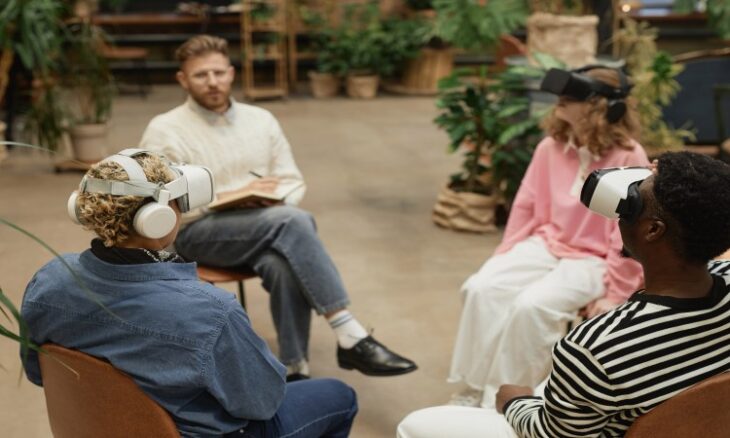
Future Places Toolkit has been designed as an alternative to traditional public consultation methods, which are often criticised for relying on technical plans and extensive paperwork that can be difficult for members of the public to engage with. Instead, the platform enables participants to collaborate during guided consultation sessions through live virtual-reality sketching and smartphone-based augmented reality.
During these sessions, participants can see their ideas appear instantly as three-dimensional visualisations overlaid onto their real-world surroundings, using technology similar to that behind games such as Pokémon Go. The approach is meant to enable people from different age groups and backgrounds to explore planning proposals together and share ideas in real time.
The platform has already been used in several regeneration projects. The team has worked with Bristol City Council on the Temple Quarter redevelopment programme, where the University of Bristol’s new Enterprise Campus is due to open in September. It has also supported projects in Birmingham and Caerphilly through collaborations with architects, planners and community organisations.
The venture has also received recognition for its work in public engagement. A consultation for the Caerphilly Town 2035 Placemaking Plan, delivered with Stride Treglown and Cowshed Communications, was shortlisted for a Pineapple Award for Public Participation, in recognition of the project’s use of immersive technology in the planning process.
The team has also contributed to the Transforming Filwood Broadway High Street plan in Knowle West. In addition, it is delivering augmented-reality engagement as part of the South Bristol Liveable Neighbourhoods consultation, extending the platform’s use across a range of community planning initiatives.
Robin Halpenny, Research Commercialisation Manager at the University of Bristol, said support for ventures such as Future Places Toolkit reflected collaboration across the university and recognised the work of teams developing projects intended to benefit local communities through research and innovation.
The spinout builds on work carried out through the MyWorld programme and its partnership with Digital Catapult, bringing together academic research, creative technologies and immersive interactive tools for use in public consultation. The £40,000 investment from ImpactU marks the latest stage in the venture’s development following its official incorporation.
Future Places Toolkit combines moderated discussions with virtual reality and smartphone-based augmented reality to enable participants to explore proposals and share ideas during consultation sessions. As those ideas are developed, they are presented as three-dimensional visualisations that can be viewed within existing surroundings, permitting communities to interact directly with potential changes before plans are finalised.
The platform has been applied across regeneration and placemaking projects involving local authorities, architects, planners and community organisations in Bristol, Birmingham and Caerphilly. These projects have demonstrated the use of immersive technology within public consultation, supporting engagement across a range of planning activities.
The launch of the spinout follows increasing interest in approaches that encourage broader public participation in planning decisions. Since cities across the United Kingdom continue to address housing, infrastructure, and climate problems, the Future Places Toolkit has been established to support an increasingly inclusive model of place-making by enabling communities to help shape proposals during the planning process rather than responding only after plans have been prepared.