


Snap AR Revives Deep Time at Natural History Museum Abu Dhabi
The Natural History Museum Abu Dhabi has announced a major new partnership with Snap Inc. that will use augmented reality to change how visitors explore science, nature, and the origins of life. The collaboration is set to launch in early 2026 and is designed to make the museum’s storytelling more immersive, interactive, and emotionally memorable, covering the full 13.8-billion-year timeline of the Universe and life on Earth.
Instead of relying only on traditional exhibit viewing, the project will introduce experiences that encourage active exploration. Through mobile-based AR and Snap’s next-generation Spectacles, guests will be able to engage with prehistoric environments and monumental species as if they are physically present, creating a learning style that prioritises discovery over observation.
One of the centrepieces of the AR programme will transform the museum’s atrium into a detailed Jurassic ecosystem. Using world-transformation technology, the space will shift into a lush prehistoric landscape, complete with ancient plant life and atmospheric lighting effects. Visitors will be able to walk among full-scale digital recreations of several major species, including Camarasaurus, Barosaurus, and Tylosaurus. The experience is designed for group participation, allowing multiple users to explore the same environment simultaneously, which adds to the sense of realism and shared discovery.
Access will be made simple through a permanent QR code placed inside the museum. By scanning it, visitors can instantly activate the experience through Snapchat’s camera, allowing them to enter the Jurassic environment at any time without special equipment beyond a smartphone. This also supports repeat engagement, since guests can return to the experience whenever they want during their visit.
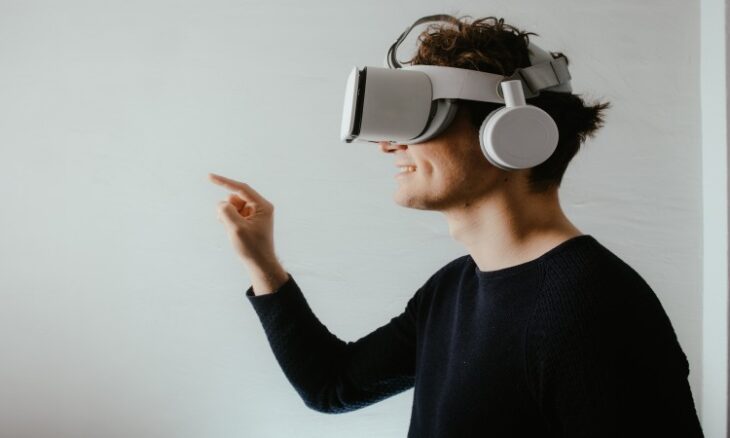
For a more immersive hands-free option, curated tours and demonstrations will include Snap’s next-generation Spectacles. Through these wearable devices, visitors will encounter a full-size, life-sized Brachiosaurus in an AR showcase designed to seamlessly blend the digital and physical worlds. Because the system does not require handheld screens, the experience aims to feel less like “watching” and more like standing inside a moment from deep time.
Another key AR feature will focus on marine life and biological understanding through a highly detailed reconstruction of a Blue Whale. The whale model has been created with photorealistic accuracy and includes an X-ray mode that reveals internal anatomy. Visitors will be able to explore organs and structures such as the heart and lungs, along with biological adaptations that support deep-sea survival. This approach converts complex scientific information into a visual learning experience that remains accessible to children, families, and non-specialist audiences.
Museum leadership has positioned the partnership within a wider effort to modernise learning through emotional connection and engagement. The collaboration aims to combine rigorous science with immersive storytelling tools, encouraging curiosity and deeper understanding rather than surface-level consumption of information. On Snap’s side, the project has been framed as an example of how AR can move beyond entertainment and become a meaningful educational platform that strengthens the public’s relationship with history and science.
Beyond the technology itself, the announcement is also being viewed as a regional benchmark for cultural institutions. By building these experiences as permanent installations, the museum and Snap are promoting a model in which digital layers enhance real-world spaces, potentially shifting expectations for how museums across the region approach accessibility and learning.
Located in the Saadiyat Cultural District, the Natural History Museum Abu Dhabi spans roughly 35,000 square metres and presents the story of life on Earth through a lens that also highlights the Arabian region’s ecological and geological history. Designed by Mecanoo, the museum combines global-scale exhibits, such as rare specimens, meteorites, and dinosaur fossils, with interactive experiences and community science programmes aimed at families, students, researchers, and lifelong learners.
The museum also positions itself as a research and education hub, hosting modern laboratories that support studies in palaeontology, earth sciences, biodiversity, and conservation. In that context, the AR collaboration is presented not simply as a visitor attraction, but also as another channel to bring scientific work closer to the public, with the long-term goal of inspiring greater interest in nature, knowledge, and environmental responsibility.