


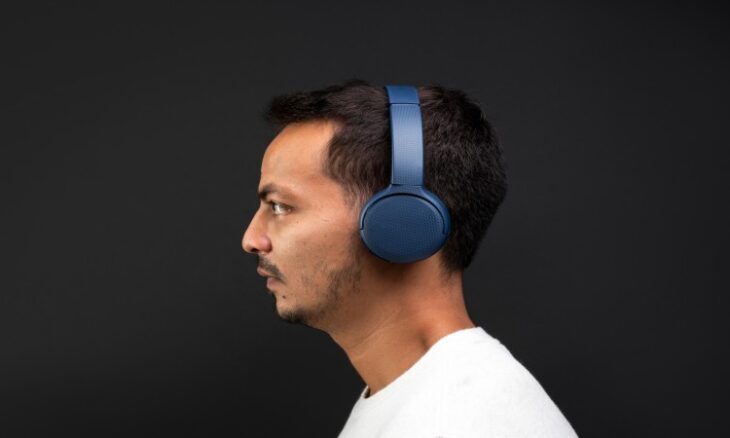
Okeanos Pro debuts as augmented reality headphones with 16 speakers
Karlheinz Brandenburg, widely recognised as a co-inventor of the MP3 audio format, has returned to the spotlight with a new product aimed at professional audio users. Through his company Brandenburg Labs, he has introduced Okeanos Pro, a headphone-based monitoring system built to deliver what the firm describes as an immersive augmented reality listening experience. Instead of relying on physical speaker arrays, the system simulates up to 16 virtual multi-channel loudspeakers, allowing users to work with complex surround formats while remaining on headphones.
The Okeanos System is positioned as an alternative to building and maintaining large studio monitoring rooms. Traditionally, multi-speaker setups can be expensive to install, difficult to calibrate, and demanding to maintain over time. Brandenburg Labs is attempting to move that entire listening environment into a portable headphone solution, using its proprietary Deep Dive Audio (DDA) technology to recreate the sensation of sitting in front of a full multichannel speaker system inside a real acoustic space.
Okeanos Pro supports a wide range of virtual speaker formats. It can operate in basic configurations such as stereo and quad, and it can also support larger arrangements, including 9.1.6 layouts, with the ability to switch between setups quickly. This makes it suitable for workflows that require frequent monitoring changes, such as comparing how a mix behaves across different speaker systems or preparing audio for multiple delivery formats.
A notable aspect of the system is that it does not rely on a single fixed ‘perfect’ virtual room. Instead, during setup, Okeanos Pro is calibrated to the acoustics of the user’s actual listening environment. That calibration is then combined with six degrees of freedom (6DoF) head tracking, enabling the audio scene to respond naturally to physical movement. When the user turns their head or shifts position, the soundstage adjusts accordingly, maintaining the impression that audio sources are coming from fixed loudspeakers placed in the room rather than from inside the headphones.
To make this possible, the system includes hardware from HTC’s Vive ecosystem. It ships with an HTC Vive Tracker and two Vive base stations, which work together to monitor the listener’s head position and movement in real time. This tracking data is then used to instantly update spatial audio rendering, helping preserve realism and stability in the simulated monitoring environment.
The intended result is a monitoring experience that behaves like a conventional studio speaker setup, but without the physical footprint. Users can position sounds across a full 360-degree field, assess spatial balance, and check how mixes translate when moved between different speaker layouts. The goal is to enable accurate decision-making at the desk while reducing the need to remove headphones or to rely on a dedicated multi-speaker room for surround work.
System control is delivered through a browser-based interface. Within this interface, users can create and manage speaker configurations using a three-dimensional visual layout. This allows quick switching between setups and offers flexibility for building custom virtual monitoring environments. The interface also includes tools to shape how the simulated speakers behave, including adjustable directivity patterns designed to mimic how different physical loudspeakers project sound into a space. This gives users the option to test mixes against different virtual speaker behaviours, rather than working with only one fixed signature.
From a technical standpoint, Okeanos Pro supports audio up to 32-bit and 48kHz, with 96kHz support planned for a later stage. It is designed to integrate into professional studio workflows and can connect with studio networks using Dante or Ravenna, making it compatible with common professional audio infrastructure.
Brandenburg Labs has indicated that significant development went into turning the concept into a system suitable for real-world use. The company reports that sales have begun, with the product being offered to professional studios and educational institutions in multiple regions.
The system’s price reflects its specialist target audience. Okeanos Pro is listed at $5,871 or €5,000, excluding tax and shipping, placing it in a premium bracket. However, Brandenburg Labs argues that the figure remains notably lower than the full cost of installing, calibrating, and maintaining a physical 16-speaker studio monitoring setup, particularly for users who need multichannel capability but lack the space or budget for a dedicated surround room.


