


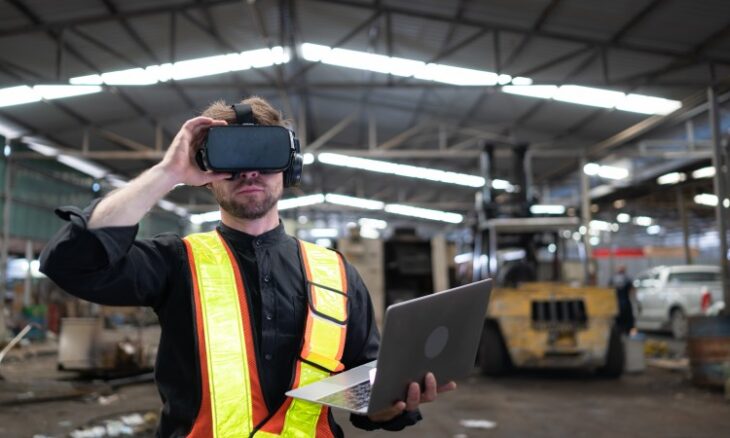
Mobile VR Forklift Simulators Roll Out in Alabama Schools
A collaboration between supply chain and logistics training provider BluWorkz and West AlabamaWorks will place 20 mobile virtual reality (VR) forklift simulators into high schools across Alabama as part of a staged workforce training initiative. The deployment forms the opening phase of a broader programme established by West AlabamaWorks, the workforce arm of The Chamber of Commerce of West Alabama, intended to make forklift VR training accessible to secondary education institutions throughout the state.
BluWorkz will supply mobile units that simulate a range of forklift operation scenarios modelled on industry practice. The simulators are designed to recreate the motions, controls, and decision-making environment of modern material-handling equipment, so students can build core operational competencies in a controlled setting. The provider positions the technology as a tool to develop foundational skills while reducing the safety risk and logistical constraints associated with training on live machinery.
West AlabamaWorks has framed the initiative as a means to reduce the divide between classroom learning and employer expectations in the manufacturing and logistics sectors. The organisation anticipates that offering immersive, consistent training across participating high schools will increase student exposure to career pathways in high-demand trades and streamline transitions into entry-level roles. Particular emphasis has been placed on extending provision into rural and underserved communities, where access to vocational training infrastructure can be limited.
The partnership will deliver standardised, industry-aligned modules intended to reflect contemporary employer requirements. The mobile nature of the simulators allows a single unit to be transported between multiple schools, enabling more equitable distribution of training opportunities without necessitating extensive capital outlay from individual education providers. Administrators from the workforce division have emphasised the importance of aligning curricula with local labour market needs so that young people gain relevant experience before entering post-secondary training or employment.
Operational planning for the rollout includes scheduling simulator rotations among district schools and integrating training sessions into vocational and career-technical education programmes. BluWorkz has indicated that the simulators can be configured for varying skill levels, from basic familiarisation to scenario-based assessments that mirror the pressures of a workplace environment. This flexibility is intended to support both introductory exposure for younger students and more advanced practice for those closer to graduation.
Stakeholders have highlighted several potential benefits from the initiative. Early immersion in practical, simulated tasks may reduce the time employers need to invest in on-the-job training and can help firms identify prospective recruits who already possess baseline competencies. For students, hands-on VR experience provides a safer route to encounter real-world occupational tasks and can inform career choices through tangible skill development. Educators view the equipment as a complement to theoretical instruction, providing a way to reinforce safety protocols and operational standards without exposing learners to live equipment risks.
The first tranche of units is expected to be deployed to a selection of high schools identified in consultation with local districts and industry partners. Further phases of the programme will be contingent on evaluation of initial outcomes, feedback from participating schools and the capacity to expand funding or secure additional equipment. West AlabamaWorks has framed the scheme as one element in a broader strategy to strengthen the regional talent pipeline and to support employers as they confront present and future workforce demands.
Overall, the initiative represents an attempt to modernise vocational training in secondary education by incorporating immersive technology into practical skills development, with the stated aim of broadening access to industry-relevant learning and bolstering local labour market readiness.