


Virtual Reality Flight Training Alters Brain Activity
Researchers found that training with virtual reality wings altered how the brain responded to wing-like structures, with neural activity becoming more similar to responses to human limbs. The findings were published on 7 May in Cell Reports following a study involving 25 participants who learned to fly using virtual reality technology.
The research examined whether people could adapt to controlling artificial wings within a virtual environment and how such training affected brain activity. Scientists involved in the project reported that the study demonstrated the extent of brain plasticity, the brain’s ability to reorganise itself in response to learning and experience.
The project began at Peking University after cognitive neuroscientist Yanchao Bi discussed the idea of human flight with Kunlin Wei, who leads the university’s Motor Control Lab. The discussion led to questions about whether people could learn to fly in a virtual environment and whether the brain could adapt to unfamiliar forms of movement.
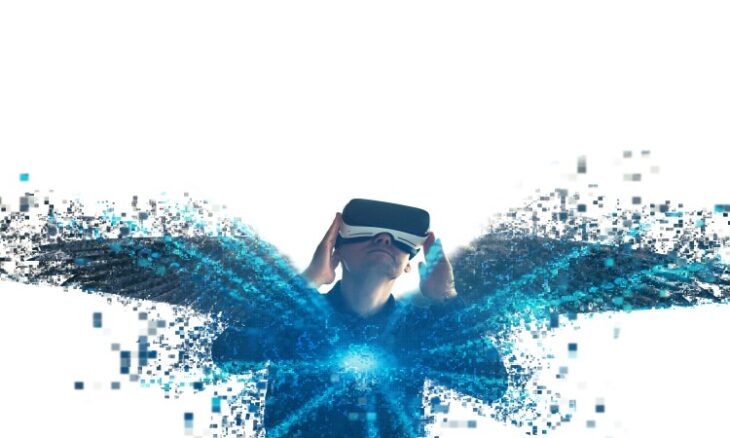
A week-long training programme was later designed by neuroscientist Yiyang Cai. The programme was based on the mechanics of bird flight and used virtual reality equipment together with motion-tracking technology. Participants wore VR headsets and viewed themselves in a virtual mirror as bird-like figures with large rust-coloured feathered wings.
The wings moved in response to participants’ physical actions. Rotating wrists and flapping arms caused the virtual wings to move in the same way, allowing participants to gain greater control over flight-related movements during the training exercises.
Participants completed a series of tasks to develop their skill to navigate the virtual environment. The exercises included striking falling airballs with wing movements, remaining airborne above steep virtual cliffs and steering through rings positioned in the air.
Researchers reported that learning speeds differed among the 25 participants. Some participants adapted to the controls during their first attempt, while others required several sessions before demonstrating stable control. Performance improvements were observed throughout the training period.
After the programme ended, researchers examined activity within the participants’ visual cortex, an area of the brain associated with processing visual information and recognising body parts. The study found that this region responded more strongly to images of wings following the virtual reality training.
The neural response to wings also became increasingly similar to the brain’s response to upper limbs. The findings indicated that participants had started to perceive the wings as part of their own bodies rather than as external objects.
Researchers stated that the results suggested the limits of brain plasticity may be broader than formerly understood. The study indicated that the brain could incorporate unfamiliar structures into its body representation when supported by repeated sensory and motor experience.
Cognitive neuroscientist Jane Aspell of Anglia Ruskin University described the study as an example of the brain’s adaptability. The research also suggested that if the brain could incorporate structures as novel as wings, it may also be capable of adapting to other forms of limb enhancement.
The researchers further reported that the virtual flying experience altered participants’ understanding of flight. The study found that direct interaction within a virtual environment provided a different form of understanding from abstract knowledge alone.
Researchers involved in the project stated that future investigation into virtual reality could help explain how the brain adapts to unfamiliar physical experiences and simulated environments.


