


Virtual Reality Study Examines Perceived Police Coercion
New research from Virginia Commonwealth University is using virtual reality to examine how people perceive coercion during a police interrogation and what the experience of being inside an interrogation room may reveal about those perceptions.
The study was conducted by Hayley Cleary, a professor of criminal justice and public policy at the L. Douglas Wilder School of Government and Public Affairs at Virginia Commonwealth University, with co-author L.A. Guarnera. Their open-access study was published in Applied Cognitive Psychology.
The study, titled “What Constitutes ‘Gross’ Coercion? Perceived Coercion in Police Interrogations Using a Virtual Reality Paradigm”, is the second article to emerge from Cleary’s Virtual Interrogation Subjective Experience (VISE) project. The project uses immersive virtual reality to study perceptions and experiences of police interrogation.
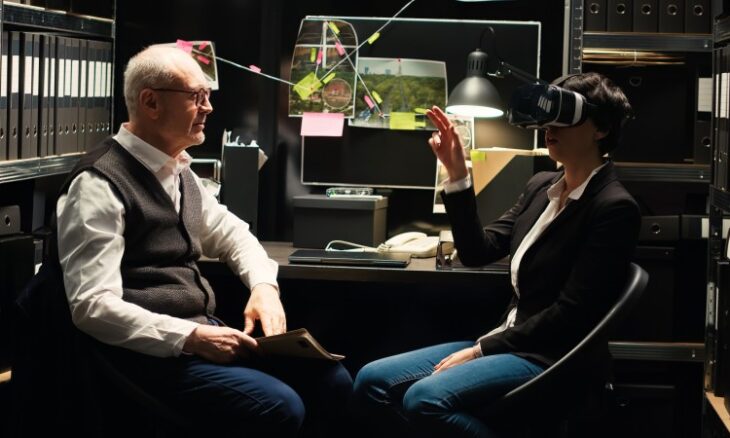
For the study, the researchers created a realistic interrogation script based on an actual case and filmed it as 360-degree video in an interrogation room. Participants wore virtual reality headsets and experienced the setting from a position alongside a young suspect who was being questioned about a homicide.
The researchers examined participants’ perceptions as the interrogation progressed. Their expectations of leniency decreased over time, while negative emotions and perceptions that the suspect’s autonomy was constrained quickly reached very high levels.
The study also found that relatively few individual characteristics predicted perceptions of coercion. The significant predictors were related to trauma history and symptoms. These outcomes were examined alongside the researchers’ wider interest in how perceptions of police interrogation develop within the interrogation setting.
The research builds on Cleary’s earlier VISE work, which examined perceptions of police custody. The findings also support ideas from theories of social influence and observations from real-world cases about the effect of being inside an interrogation room on perceptions.
The study has relevance to questions that arise in the legal system when courts consider whether a confession was voluntary. Judges across the United States are asked to rule on the voluntariness of confessions, but may have limited information about what it feels like to be inside an interrogation room during questioning.
Cleary and Guarnera’s research is intended to provide evidence that can inform those decisions. The work examines perceptions within an immersive interrogation setting rather than relying only on descriptions of interrogation conditions outside the room.
The research is continuing through the VISE project. Cleary and her collaborators recently filmed VISE 2.0 in partnership with a local police department.
Cleary’s National Science Foundation grant supports the expanded project. It will allow researchers to test new questions and collect additional data from participants who were exposed to the virtual interrogation.
The additional data will include participants’ biophysiological responses to the virtual interrogation. This will extend the information collected through the project beyond participants’ reported perceptions and experiences.
The VISE research therefore continues to examine police interrogation through an immersive virtual reality setting, with the latest work focusing on perceived coercion, negative emotions, constrained autonomy and expectations of leniency. The ongoing project will also provide further data on participants’ responses to the interrogation experience.


