


Virtual Reality Shows Mixed Results in Brain Training
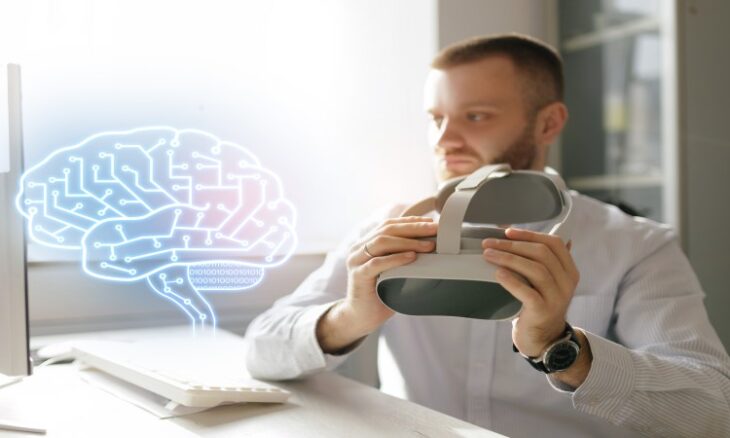
Virtual reality may make neurofeedback more engaging for users. Still, evidence that it improves their ability to control brain activity remains mixed, according to a review of 31 studies published in Applied Psychophysiology and Biofeedback. The review found that participants generally preferred immersive virtual reality feedback to conventional two-dimensional displays, while differences in study methods made it difficult to establish its precise benefits.
Neurofeedback is a technique that allows individuals to learn to alter their brain waves by viewing them in real time. During a typical session, sensors are placed on the scalp to record the brain’s electrical activity through electroencephalography, or EEG. The system processes the electrical signals as they are recorded and provides visual or auditory feedback to the user.
Specific brain-wave patterns correspond to different mental states. A relaxed but focused state, for example, produces a particular frequency rhythm. When a person’s goal is to improve focus, neurofeedback software can reward the user when their brain waves reach the target frequency. Traditional systems usually provide this reward through a simple two-dimensional graphic on a computer monitor, such as a rising bar graph or a moving line.
Software developers have begun replacing these basic displays with virtual reality environments. Instead of watching a bar graph, a user wearing a headset can make a virtual flower bloom or cause a digital spaceship to accelerate by changing their mental state. Psychologists Silvia Erika Kober, Guilherme Wood and Lisa Maria Berger at the University of Graz in Austria reviewed research combining EEG-based neurofeedback with virtual reality to examine how the immersive approach compared with standard methods.
The researchers searched academic databases for studies that combined EEG-based neurofeedback and virtual reality. After excluding papers that lacked sufficient experimental details, they identified 31 studies for analysis. The research varied considerably in methodology, with participant numbers ranging from single-case studies to studies involving 100 people. Many of the reviewed studies had fewer than 50 participants.
The studies examined both healthy individuals and clinical patients. Some involved people receiving treatment for chronic pain, migraines or the effects of a stroke. The virtual environments also differed between studies. In various experiments, participants were asked to navigate a ball through a forest, interact with virtual animals, or change the lighting in a digital auditorium using their brain waves.
Across the 31 studies, participants generally preferred virtual reality feedback to traditional two-dimensional screens. They often reported greater enjoyment, interest and perceived competence while using three-dimensional virtual environments. The finding may be relevant to neurofeedback programmes that require dozens of sessions over several months, where increased motivation could help users remain engaged with treatment.
The evidence was less consistent when the studies examined whether virtual reality improved the ability to control brain waves. Some research found that participants reached their target brain-wave states more quickly while using virtual reality. Other studies found no difference in brain-wave control between immersive virtual reality and traditional formats.
Virtual reality allows users to practise applying mental skills in situations that resemble everyday challenges. One goal of neurofeedback is for patients, including children with attention deficit hyperactivity disorder, to learn to regulate their attention without relying on a computer screen for guidance. Virtual reality can create realistic simulations, such as a busy classroom, where users practise regulating their brain activity while dealing with distractions.
The review identified several factors that complicate using virtual reality for neurofeedback. Headsets can differ from computer screens in brightness, field of view and visual complexity. Changes in screen brightness alone can alter specific brain-wave frequencies. This can make it difficult to determine whether changes in brain activity reflect successful relaxation or a response to light emitted from the headset’s lenses.
Virtual environments can also provide too much visual stimulation. A visually rich, multi-sensory environment may be entertaining, but it can cause cognitive overload. If the environment demands too much attention, users may become distracted from the main task of regulating their mental state. This can reduce their performance during neurofeedback.
Virtual reality can also introduce physical side effects that do not typically occur with conventional computer monitors. Cybersickness, a form of motion sickness caused by virtual environments, can produce nausea, dizziness and eye strain. The review found that women tended to experience these symptoms more frequently and more severely than men. Such effects could negatively affect neurofeedback performance.
Age was another factor the researchers identified. Older individuals, who may be less familiar with virtual reality interfaces, sometimes reported higher levels of fear and anxiety during sessions. The authors indicated that virtual reality feedback may therefore not suit everyone, particularly people prone to motion sickness or who can become overwhelmed by sensory input.
The researchers also identified weaknesses in many study designs. A major limitation was the lack of proper control groups. Some studies tested only a virtual reality condition and did not compare it with traditional screen-based feedback or a fake-feedback condition. Without these comparisons, it is difficult to separate the effects of brain training from the excitement associated with using a novel technology.
The rapid commercial development of virtual reality headsets and devices that record neural activity has also raised ethical concerns. The review discussed the risk of “neuroenchantment”, in which people unquestioningly trust neurotechnology because it appears futuristic. This can leave consumers vulnerable to misleading advertising from companies selling home-based brain-training systems for self-improvement or entertainment.
Privacy is another concern as private companies develop consumer devices that can record neural activity. More than half of the consumer neurotechnology companies assessed in a separate industry report allow third parties to access brain data. As brain-computer interfaces become more accessible, the authors said future research needs both rigorous experimental designs and strong data protection standards.
The study, “Controlling Virtual Reality With Brain Signals: State of the Art of Using VR-Based Feedback in Neurofeedback Applications”, was authored by Silvia Erika Kober, Guilherme Wood and Lisa Maria Berger.


