

Hospital VR Study Examines Brain Responses to Nature
A waterfall runs through moss-covered cliffs in a virtual landscape, surrounded by lush greenery. The sound of rushing water fills the patient’s headset, drowning out hospital noise. Each VR session lasts 15 minutes. When the headset comes off, the virtual landscape disappears, and the patient returns to the hospital room, where they may spend several days or weeks.
For people with drug-resistant epilepsy, extended hospital stays can affect mental health. Researchers at University of Utah Health are studying whether virtual reality (VR) nature experiences can reduce depression symptoms and improve quality of life among patients with limited access to outdoor environments. The research explores whether virtual nature can improve mental health, not just provide a short-term distraction from the hospital environment.
The study is the first to combine VR nature immersion with simultaneous recordings from electrodes implanted deep inside the brain. The electrodes are already in place as part of the patients’ epilepsy treatment, allowing researchers to observe brain activity while participants experience virtual environments. This method allows researchers to observe brain responses in greater detail during and after virtual immersion, compared to previous techniques.
Previous studies examining the effects of nature exposure have relied on self-reported questionnaires, scalp recordings, or functional magnetic resonance imaging (fMRI). These methods have been used to assess responses to nature photographs and time spent outdoors. Brain recordings allow researchers to study changes in internal brain regions as participants experience virtual nature.
The research team compares responses to two different virtual settings: a natural landscape and an urban cityscape. The study aims to see how virtual nature affects mood, stress, and attention, and whether these effects differ from those of a virtual urban setting.
Patients with drug-resistant epilepsy continue to experience seizures despite medication. Some require surgery in which neurosurgeons implant multiple electrodes in the brain. These electrodes monitor electrical activity in deep brain structures, helping the clinical team identify where seizures begin.
After surgery, patients remain in an epilepsy monitoring unit while their brain activity is recorded. The implanted electrodes are connected to a device that records brain activity continuously. This connection means patients cannot leave their beds unaccompanied. Under a neurologist’s care, they wait for seizures to occur so that the medical team can monitor the associated brain activity. The process can continue for days or weeks, during which patients have no access to natural outdoor environments.
Extended periods in bed can create a stressful and monotonous routine. This environment can increase anxiety and depression, which many people with drug-resistant epilepsy already experience. The research examines whether providing access to virtual natural environments during these hospital stays could help address some of these difficulties.
The interdisciplinary research team includes Elliot Smith, PhD; David Strayer, PhD; Jeanine Stafanucci, PhD; and Amy McDonnell, PhD. Neurosurgeons Shervin Rahimpour, MD, and Ben Shofty, MD, PhD, also collaborate on the project. They perform the surgeries required to implant the electrodes used for continuous brain monitoring.
Production company HabitatXR developed the virtual environments used in the study. It created high-resolution, three-dimensional videos accompanied by immersive audio. One environment presents a natural landscape, while the other depicts an urban cityscape. The two settings offer contrasting experiences for patients participating in the research.
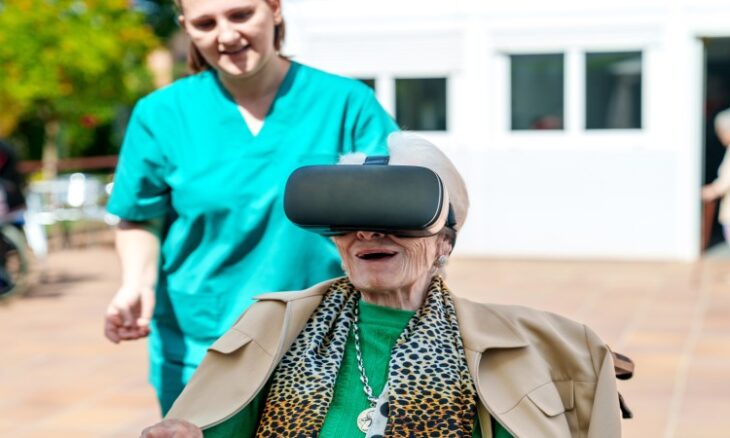
Patients wear the VR headset while sitting upright in their hospital beds. By turning their heads, they can look around the virtual surroundings. In the natural setting, they can observe a waterfall and the surrounding forest. In the urban environment, they can watch a pedestrian walk past on a city street and look down an avenue. The scenes are presented from a first-person perspective, allowing patients to feel present in the virtual environment.
The comparison between the two environments is central to the study of nature deprivation. A few days after admission, patients experience one virtual setting. Several days later, they experience the other. Researchers compare patient responses to see if virtual nature leads to different outcomes than the urban environment. So far, patients have responded positively.
The implanted electrodes provide another way to examine the sessions’ effects. Researchers can record brain activity while patients experience the virtual environments and complete cognitive tasks before and after immersion. One area of interest is ‘soft fascination,’ when natural scenes gently hold a person’s attention without demanding full focus. This type of attention may allow the brain’s attention system to rest and reset.
Preliminary observations from a small patient sample showed lower reported stress and negative affect after nature immersion than after exposure to the urban setting. Researchers also recorded changes in brain activity during the nature experience. The results suggested that after viewing the natural setting, patients found it easier to ignore distractions and handle conflicting information.
The implanted electrodes also allow researchers to examine activity in specific brain regions, including the anterior cingulate cortex. This region is associated with the severity of depression. By comparing signals recorded from this area during nature immersion and urban exposure, the team can investigate differences in neurological responses.
Early observations showed increased alpha-wave activity throughout the nature immersion sessions. This increase was not observed during the urban condition. Alpha waves are associated with alertness and mood. These recordings help researchers see how brain activity shifts in response to different virtual environments.
The study is ongoing, and researchers need more data to understand these brain changes and determine if VR nature experiences could become a therapy for people who cannot easily access nature.
Although the current research involves patients with implanted electrodes, its findings could have wider implications. People who spend extended periods indoors, including those in long-term care facilities, hospitals and correctional facilities, may also have limited opportunities to experience nature. VR could give these groups access to some aspects of natural environments when going outdoors is difficult.
However, virtual reality does not replace direct contact with nature. The research focuses on whether immersive digital experiences can benefit people who cannot easily access outdoor spaces. Researchers are also exploring whether VR nature could help other groups who spend long periods indoors.