

Mixed Reality Could Help Link Classroom Learning to Work
Mixed Reality could help bridge the gap between classroom learning and workplace experience by giving students and trainees opportunities to develop practical skills before entering real-world environments, researcher Rachel Israel Abasiama has said.
Abasiama made the argument in a research article titled “From the Classroom to the Factory: Can Mixed Reality Prepare Nigeria’s Workforce for the Future?” She argued that Nigeria needed to explore immersive technology to prepare its young workforce for an increasingly digital, technology-driven economy.
She said the traditional education system often prioritised examinations and certificates, leaving many graduates with strong theoretical knowledge but limited exposure to the equipment, processes and working environments they would encounter in industry.
According to Abasiama, the problem was not a lack of intelligence or commitment among Nigerian students, but limited access to practical training facilities. Practical training is expensive, laboratories require continuous investment, and industrial equipment can be costly to acquire and maintain. Safety concerns can also make it difficult to expose students to certain operations.
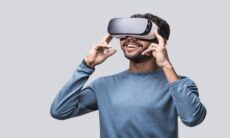
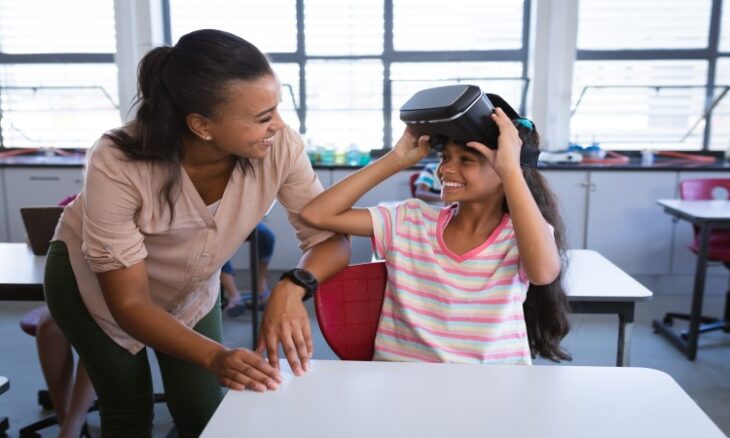
Abasiama said Mixed Reality, which combines physical and digital environments to create immersive learning experiences, could help students understand complex subjects by allowing them to simulate real-world situations without some of the risks and costs associated with conventional training.
She illustrated the potential application with the example of a chemical engineering student learning about fluid flow through pipelines. Using a Mixed Reality headset, the student could observe virtual fluids moving through pipelines and understand how pressure, velocity and bending affected their movement.
The technology could also be applied in medicine, construction, electrical work, welding, mechanics and machine operation. In these areas, trainees could practise procedures and identify potential hazards before handling actual equipment.
Abasiama stressed that Mixed Reality would not replace real-world experience. Instead, she presented it as a way to prepare learners for practical work by allowing them to gain exposure to procedures and situations before encountering them in actual environments.
The researcher also warned that the technology could worsen educational inequality if access remained concentrated in elite private schools and well-funded universities. She called for collaboration among the government, universities, industries and technology companies to develop immersive learning solutions suited to Nigeria’s educational and industrial needs.
Abasiama further urged Nigerian researchers and software developers to create locally relevant Mixed Reality applications rather than relying entirely on imported technologies. She argued that local development should reflect the requirements of Nigeria’s education system and industrial environment.
She maintained that Mixed Reality would not replace teachers, laboratories or hands-on industrial training. Instead, it could serve as a bridge between theory and practice by giving students an opportunity to engage with practical situations before they encounter them in workplaces.
The proposed use of immersive technology is linked to the limits of conventional practical training. Where laboratory facilities require continued investment, industrial equipment is expensive to maintain, or safety concerns restrict access to certain operations, simulated environments could give learners another way to engage with the relevant processes.
The chemical engineering example illustrates the type of learning experience Abasiama described. Rather than studying fluid flow solely through theoretical instruction, a student could use a Mixed Reality headset to observe how virtual fluids flow through pipelines and how pressure, velocity, and bending influence that flow.
Similar simulations could allow trainees in other fields to practise procedures and recognise hazards before using actual equipment. The applications identified by Abasiama range from medicine and construction to electrical work, welding, mechanics and machine operation.
The researcher, however, did not present Mixed Reality as a substitute for classroom teaching or practical training. Teachers, laboratories and hands-on industrial experience would remain part of the learning process, while immersive technology could provide an additional link between academic knowledge and workplace practice.
The technology’s accessibility remains an important consideration in the proposal. Abasiama’s warning centred on the risk that students in elite private schools and well-funded universities could gain access to immersive learning tools while others remained excluded.
She therefore called for cooperation between public institutions, universities, industry and technology companies to develop systems that reflect Nigeria’s educational and industrial needs. She also called on Nigerian researchers and software developers to develop locally relevant applications rather than relying entirely on imported solutions.
Abasiama’s research ultimately placed the classroom closer to the workplace by suggesting that elements of practical and industrial learning could begin before students reached a factory or other professional setting. Mixed Reality, in this context, would provide an opportunity to simulate equipment, processes and working situations while students were still in education.
The technology would not remove the need for direct experience. Rather, it would supplement existing education by helping learners engage with practical situations before entering real-world environments.
The researcher argued that the factory of tomorrow need not be the first place where a student encounters the realities of industrial work. Her proposal was that some of that exposure could begin in the classroom through immersive learning, while teachers, laboratories and hands-on industrial training continued to provide the practical experience that Mixed Reality could not replace.