


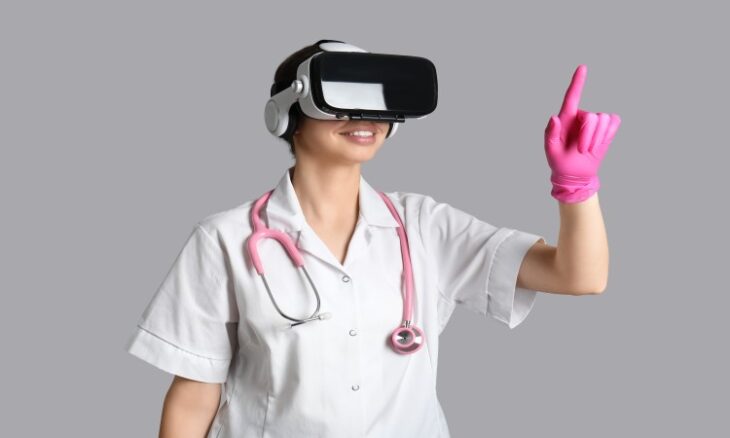
AI Healthcare Training Simulator Secures University Funding
Northeastern University has secured a $900,000 grant from the National Science Foundation to advance a virtual reality clinical education system powered by artificial intelligence. A multidisciplinary faculty group is currently refining this platform to emulate medical environments. The initiative aims to enable interaction between health professions students and virtual patients. The objective is to provide trainees with exposure to unscripted clinical scenarios that are typically difficult to replicate in traditional academic settings.
Standardising clinical education is difficult because real patient interactions are highly unpredictable and vary widely by circumstance and location. Trainees often lack adequate hands-on opportunities before entering real medical facilities. This limitation complicates efforts to ensure that all students are adequately prepared for real patient care. The digital tool, named the Virtual AI Patient Simulator, addresses these educational obstacles by generating controlled yet responsive medical scenarios.
Funding from the National Science Foundation spans three years and operates under the Research on Innovative Technologies for Enhanced Learning program. This funding channel supports projects that leverage artificial intelligence, robotics, and immersive technologies to improve pedagogical methods. Faculty members from the College of Arts, Media and Design, the Khoury College of Computer Sciences, and the Bouvé College of Health Sciences have combined their expertise to build and enhance the system.
The primary technology focuses on generating adaptable virtual patients within simulated environments. These digital avatars are designed to display realistic speech patterns, make appropriate eye contact, and utilise natural facial expressions and physical gestures. Authentic clinical case records drive the underlying conversational artificial intelligence. This programming ensures that the simulated dialogue mirrors genuine medical consultations. Trainees interact with the system in real time, allowing them to practice their clinical communication techniques dynamically.
The platform’s foundational development began several years ago after the team received a Transforming Interdisciplinary Experiential Research seed grant. The university awards these preliminary grants to cross-disciplinary teams specifically to establish proof of concept for emerging technological concepts. This initial financial support enabled the research group to refine their designs to a level suitable for external funding applications. During this preliminary phase, the researchers successfully constructed and trialed the foundational hardware and software. This included the virtual reality headsets and the core conversational programming of the avatars.
Future development phases supported by the new federal funding will focus on expanded testing protocols and creating formal performance assessments. The project team intends to build an independent authoring application to expand the platform’s utility. This new tool will enable clinical educators lacking prior experience with artificial intelligence or virtual reality systems to design custom virtual patients. These bespoke avatars can then be tailored precisely to specific syllabus requirements and academic classrooms.
The hardware employs biometric monitoring to evaluate user performance during the medical simulations. The virtual reality headsets collect continuous eye-tracking metrics and monitor students’ heart rates during simulated consultations. This physiological data allows researchers to measure responses during medical interactions. Furthermore, the development team is designing a distinct animation framework dedicated to enhancing the visual realism and nonverbal behavioral cues of the digital patients.
The project extends beyond the technical sophistication of medical instruction by emphasising the interpersonal elements of professional care. The simulator-based curriculum targets communication proficiency, active listening, and clinical empathy. Trainees are expected to become more adaptable as they navigate complex social interactions. The virtual environment serves as a secure instructional space where learners can manage difficult conversations, review their performance, reflect on their decisions, and repeat scenarios multiple times.
The core research group expanded its membership after successfully securing preliminary seed funding. The current team features a principal investigator holding an assistant professorship in art and design and communications studies. Additional members include an associate professor holding a joint appointment in art and design and physical therapy. The project also includes associate clinical professors from the physical therapy department with specialised backgrounds in simulation-based instruction.