


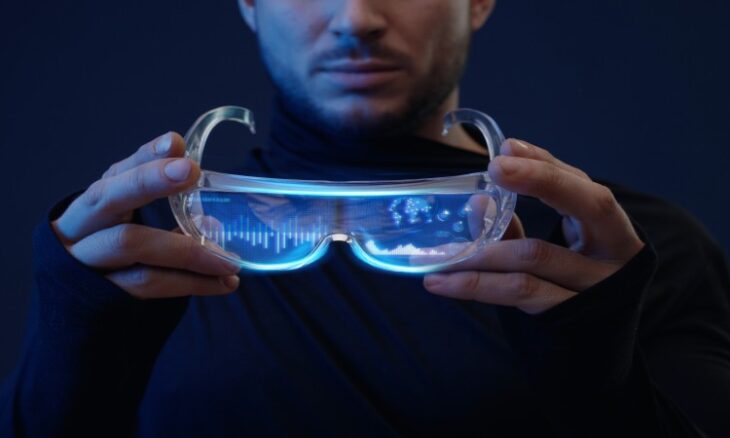
Xreal One Pro+ Launches With 1,200-Nit Displays
Xreal launched its One Pro+ augmented reality (AR) glasses on 15 October 2026, priced at $599, the same as the previous One Pro model. Display brightness has increased from 700 to 1,200 nits on the One Pro+. The glasses also support AI HDR processing and offer faster conversion of standard 2D content into 3D imagery. A redesigned nose pad also changes the fit for extended use.
The One Pro+ uses two 0.55-inch Sony Micro-OLED panels, each providing a resolution of 1,920 by 1,080 pixels. The displays offer a 57-degree field of view and peak brightness of 1,200 nits, an increase of about 71 per cent over the original One Pro. Xreal says the higher brightness helps keep virtual content visible in brighter ambient conditions.
AI HDR processing balances contrast across connected video feeds and games. The glasses also feature adjustable electrochromic dimming, letting wearers control how much of the physical environment remains visible behind virtual imagery. The dimming function and HDR processing serve different purposes: one controls the view of the surroundings, and the other handles image contrast.
Xreal has upgraded its Real3D engine, an onboard spatial conversion system that adds stereoscopic depth to 2D content. The system now processes the conversion at 60 frames per second (fps), doubling the previous 30fps limit. Existing One, One Pro and 1S models are scheduled to receive the same 60fps conversion capability through a firmware update in November 2026.
The One Pro+ also offers three display modes: Standard, Gaming and Reading. The virtual screen can be anchored in three-dimensional space instead of following the wearer’s head movements. This function uses Xreal’s proprietary X1 spatial computing chip, which supports native three-degrees-of-freedom tracking.
The physical design has also changed. Xreal has replaced the previous nose interface with a redesigned nose pad assembly featuring a larger contact area. The company says the revision improves weight distribution, comfort during prolonged use and display alignment without reducing the field of view.
The adjustment mechanism has also been simplified. Users can change the virtual screen’s size and distance through the button rocker rather than navigating on-device menus. These changes address the fit and control features of the glasses, while the display system and spatial computing hardware retain the specifications described for the previous model.
The One Pro+ remains a tethered display accessory that draws power and receives video through a USB-C connection supporting DisplayPort Alternate Mode. It works with laptops, mobile phones, drones, game consoles and handheld devices such as the Steam Deck. The glasses have no onboard battery, cellular modem or standalone operating system, so they depend on a connected device for power and video output.
The glasses lack integrated cameras. This distinguishes the design from camera-equipped smart glasses, including the Ray-Ban Meta range. The absence of built-in cameras also avoids the bystander-recording concerns associated with camera-equipped devices in public spaces.
Xreal offers the optional Xreal Eye camera module separately for $99. The accessory captures photos and videos and supports six-degrees-of-freedom tracking. Recording mixed-reality video requires pairing the camera module with the company’s Beam Pro companion device.
The One Pro+ is available in two sizes, with dispatch times depending on the model. Size M is designed for interpupillary distances (IPDs) between 57 and 66 millimetres and ships immediately. Size L accommodates IPDs between 66 and 75 millimetres and ships approximately two weeks after purchase.
Orders opened through Xreal’s website on 15 October at a manufacturer’s recommended retail price of $599. The glasses are due to reach Amazon on 29 October 2026. The price matches that of the previous One Pro, while the entry-level a01+ AR glasses in Xreal’s product range are priced at $299.
The November firmware update will bring faster 2D-to-3D conversion to the existing One, One Pro, and 1S models. However, the updated glasses include increased peak brightness and a redesigned nose pad.


