


USF Study Reveals AR Design Gap for Children
For decades, the use of technology in schools has centred on desktop computers and basic digital instruction. More recently, immersive tools have begun reaching younger users, changing how children interact with information and their physical surroundings. As such technologies become more advanced, researchers at the University of South Florida have examined whether they correspond with how children think and learn.
The study identified a clear gap between how augmented reality systems are designed and how children engage with them. It found that although children are increasingly exposed to digital devices throughout different settings, many of these systems continue to be developed with adult users in mind. This approach can result in experiences that do not match children’s expectations or interaction styles.
The research was led by Julia Woodward, an assistant professor at the Bellini College of Artificial Intelligence, Cybersecurity and Computing. Her work focused on how children aged 9 to 12 use augmented reality compared with adults, identifying consistent differences in behaviour and interaction habits.
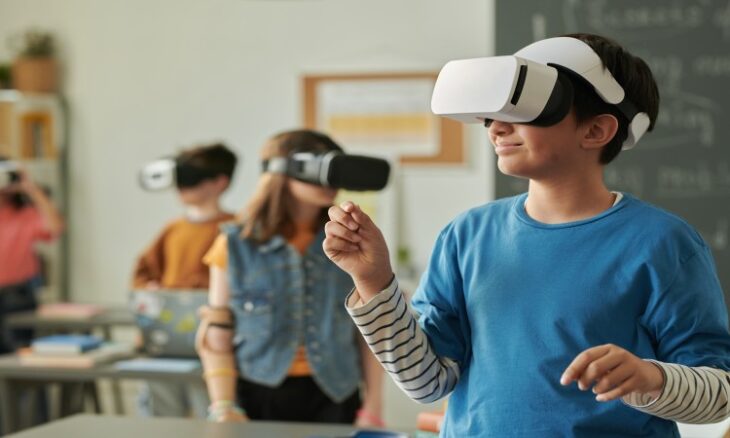
Augmented reality technologies, including headsets, are typically designed for users aged 13 and above. Despite this, younger children are already using these systems, particularly in instructional environments such as schools and museums. Augmented reality enables interactive experiences while keeping users grounded in the real world, which reduces effects such as motion sickness and visual fatigue. It also has potential applications in science, technology, engineering, and mathematics education, especially for concepts that are difficult to understand in traditional textbooks.
However, the study found that children use these systems with expectations that differ from those assumed in adult-focused designs. Many current interfaces rely on fixed gestures or command-based inputs, which do not reflect the exploratory, intuitive ways in which children interact with new technologies. This mismatch highlights shortcomings of current design approaches.
To examine these differences in detail, the research team conducted a structured study involving children aged 9 to 12. Each participant spent one hour in a laboratory setting using an augmented reality headset. The sessions were divided into 12-minute intervals, during which participants completed a series of tasks, including a virtual three-dimensional cube.
Children were asked to perform 17 different actions, including moving, shrinking and making the cube disappear. The responses demonstrated a wide range of interaction methods. Some participants approached tasks by imagining mechanical processes, such as using a hydraulic press to shrink the cube, while others incorporated external objects, including using a stick to move it. These responses reflected varied and creative interpretations of how the system could be used.
After being shown and physically guided through an initial interaction method, each participant was asked to identify a second way to achieve the same outcome. This allowed experts to observe both instinctive responses and the ability to adjust or vary interaction strategies. The study also collected usability ratings from participants, who evaluated how well each user interaction matched the task and how easy it was to perform.
The research team analysed whether children kept consistent approaches or altered their methods when asked to repeat tasks in different ways. The results were then compared with results from previous studies involving adult users interacting with similar augmented reality systems.
The comparison showed distinct behavioural differences. Children were more likely to use physical gestures and imaginative approaches, frequently considering how objects could be manipulated using real-world logic. They frequently relied on movement and external tools when completing tasks. In contrast, adult users typically began with familiar hand gestures and, if needed, shifted to speech-based commands.
The study also found that children tend to interpret augmented reality elements as extensions of the physical world. They expect virtual objects to behave in ways consistent with real-world properties, including weight, force and physical interaction. This differs from the more abstract interaction models commonly used in systems designed for adults.
The results show that designing augmented reality tools for children requires a distinct approach that reflects their cognitive and behavioural patterns. Simply adapting systems originally designed for adult users may not meet the needs of younger audiences, notably in educational contexts where usability and comprehension are critical.
While the study creates a baseline for understanding these interaction differences, the research team has begun applying its findings to further work. One ongoing project uses insights from the cube-based experiment to develop an educational augmented reality application focused on teaching fractions. This project contains interactive scenarios that use virtual pizzas to represent fractional concepts in a practical way.
The report spotlights the need for child-focused design in the development of immersive technologies. It emphasises that effective implementation in learning environments depends on aligning system design with how children naturally interpret and communicate with digital and physical elements.