

Gravity Sketch Adds Spatial AR Features for 3D Reviews
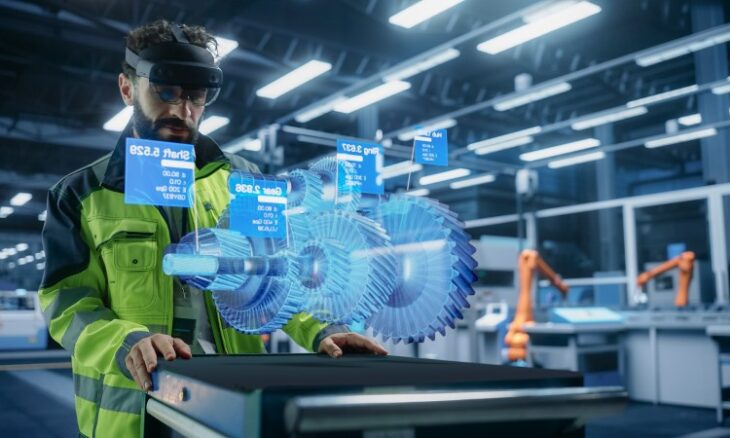
Gravity Sketch has introduced new augmented reality capabilities designed to improve the assessment of 3D content and support collaboration across design teams. The updates enable users to anchor digital content to physical environments and review designs at full scale within real-life settings.
The release comes as organisations face increasing volumes of 3D content generated through artificial intelligence tools, alongside pressure to shorten product development cycles and reduce spending on physical prototypes. Gravity Sketch, an immersive 3D workspace used by companies including Adidas and Ford, said the new features are meant to support the review of 3D designs at scale and within their intended environments.
According to the company, the updates have been enabled by recent hardware developments, including built-in depth cameras on headsets. These advances have addressed earlier limitations involving environmental meshing and positional tracking.
The new functions allow users to create, edit and save spatial alignments. Virtual rooms and their contents, including 3D models, sketches and wireframes, can now be fixed to physical locations. Those alignments can be accessed by users in the same virtual room and physical location via the environments panel in virtual reality.
Gravity Sketch said the functionality allows 3D data to be anchored to actual objects. This enables teams to review designs in context and assess scale next to physical surroundings. The company said that the updates can reduce the requirement for physical prototypes while maintaining design quality and minimising errors.
The announcement follows the wider adoption of AI tools across design and manufacturing industries. A recent Autodesk report found that 98 per cent of design and manufacturing leaders use AI tools, including systems capable of generating 3D designs. As the volume of digital content increases, augmented reality is being used to review designs within real-world environments and at full scale.
Gravity Sketch said that viewing designs through augmented reality can provide depth perception not available on a flat display. The company announced that this can support the assessment of factors such as scale, proportion, ergonomics and spatial relationships during the design review process.
The company also said that advances in AI and hardware have made creating 3D content easier. It identified the review and evaluation of that content as an increasingly important stage in the design process.
The launch also comes as manufacturers face rising operating costs and supply chain uncertainty. A survey by the National Association of Manufacturers found that 78 per cent of manufacturers regarded trade uncertainty as their primary concern. The survey also found that most respondents expected input costs to increase by more than 5 per cent over the following year. Rising energy prices and supply logistics disruptions linked to the war in Iran have added to those pressures.
Against that backdrop, manufacturers are examining costs associated with physical prototypes. Gravity Sketch said augmented reality allows teams to evaluate and compare design variations before committing to physical production.
The organisation underscored the high prototype costs in the automotive industry, where a single clay model for a vehicle programme can cost around a quarter of a million dollars. Multiple models may be produced during the development of a flagship vehicle. Gravity Sketch said augmented reality makes it possible to examine several digital alternatives around a single physical model, lessening the need to build additional prototypes.
The company also said that the new spatial alignment tools support collaboration between teams working in different locations. According to Gravity Sketch, users can create and save alignments within a virtual room, permitting teams in separate regions to view the same full-scale virtual prototype.
Gravity Sketch stated that this approach can reduce the need for travel and limit the number of physical prototypes required during the review process. The company said teams can carry out more design iterations in virtual environments before proceeding to physical builds.
The updates also allow digital objects to continue aligned with physical environments after users leave and later return to a session. Gravity Sketch said persistent alignment helps preserve consistency during reviews and supports continued use of shared virtual content across multiple sessions.