


Vall d’Hebron Joins European VICTOR-XR Technology Programme
The European research initiative VICTOR-XR has officially commenced operations to develop a new generation of extended reality technologies. Funded by Horizon Europe’s Cluster 4 programme, the project is a cross-border collaboration focused on human-centric digital and industrial technologies.
The consortium brings together sixteen distinct institutional partners from seven European countries. These organisations will work together over a predetermined three-year period to develop advanced technological systems.
Among the participating entities is the medical institution Vall d’Hebron, which serves as the designated clinical partner for the entire research programme. The project focuses on building technologies that continuously synchronise physical environments with their virtual counterparts.
The VICTOR-XR programme’s technological infrastructure relies on integrating digital twins, multimodal sensing apparatuses, and cognitive assistants powered by artificial intelligence. Researchers associated with the sixteen partner organisations intend to synthesise multiple data inputs. These inputs include visual tracking, speech recognition, gaze monitoring, biosignal processing, and haptic feedback devices.
This amalgamation of sensory and digital data is structured around a central operational system classified as Virtual-Physical Consistency. This framework ensures virtual environments remain accurately aligned in real time with physical processes, infrastructure, and the people using them.
The deployed technology enables computer systems to identify operational discrepancies as they occur. Furthermore, the framework enables software to record user actions and support adaptive extended reality interfaces alongside artificial intelligence co-pilots.
Rather than confining the technological development to laboratory settings, the participating institutions will implement and assess these innovations across three large-scale pilot environments. These real-world applications prioritise operational accuracy, physical safety, and human performance metrics.
The first validation environment operates within the automotive manufacturing sector. In this industrial context, the extended reality systems will be deployed to help engineers and factory operators interact with highly detailed digital twins representing physical products and associated production processes.
This digital interaction is scheduled to occur before any physical prototypes are fabricated. By enabling early identification of assembly complications and structural design flaws, the technology allows manufacturers to reduce the frequency of physical errors. This digital-first validation process is also intended to shorten standard validation cycles and increase overall industrial productivity. At the same time, the virtual framework creates immersive training environments for manufacturing personnel.
The second large-scale pilot focuses on integrating human workers and robotic systems within advanced manufacturing facilities. Modern industrial environments increasingly necessitate direct collaboration between personnel and automated machinery.
To address this, the VICTOR-XR initiative will formulate specialised extended reality interfaces designed for these shared workspaces. These advanced interfaces project visualisations of the intended movements and operational targets of the robotic units.
At the same time, the systems actively monitor the physical actions and positions of the human operators sharing the workspace. Based on this continuous stream of positional data, the technology provides adaptive, real-time guidance to the personnel. The goal is to improve productivity, safety, and ergonomics in workspaces where humans and robots collaborate.
The third application environment operates within the healthcare sector. Vall d’Hebron directs the clinical study component of this pilot programme. The objective is to support medical rehabilitation regimens tailored for patients diagnosed with chronic musculoskeletal conditions.
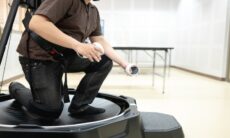
Throughout the clinical trials, participating patients will engage with immersive extended reality experiences incorporating the project’s digital twin architecture and artificial intelligence co-pilots. The technology provides patients with personalised guidance and immediate feedback during physical therapy.
In turn, the medical professionals overseeing the treatments receive new diagnostic and monitoring tools. These tools enable clinicians to accurately observe patient progress and remotely modify therapeutic routines without requiring the patient’s physical presence at the medical facility.
Throughout the development and implementation phases across all three pilot environments, the consortium operates under established ethical and regulatory parameters. The technical architecture embeds principles of privacy, accessibility, and algorithmic explainability directly into the core design of the extended reality systems.
The participating organisations maintain compliance with established European regulatory systems. This compliance ensures that the technological innovations meet European standards for digital inclusion and transparency.
Beyond the immediate pilot applications, the broader administrative objective of the VICTOR-XR project is to support Europe’s strategic ambitions to expand virtual worlds and Industry 5.0 methodologies. To achieve this, the partner institutions will contribute data to develop universal industry standards. The initiative will also promote system interoperability and create new learning pathways based on extended reality technologies to expedite adoption across commercial, industrial, and medical sectors.