


NASA Names Finalists in 2026 Blue Skies Contest
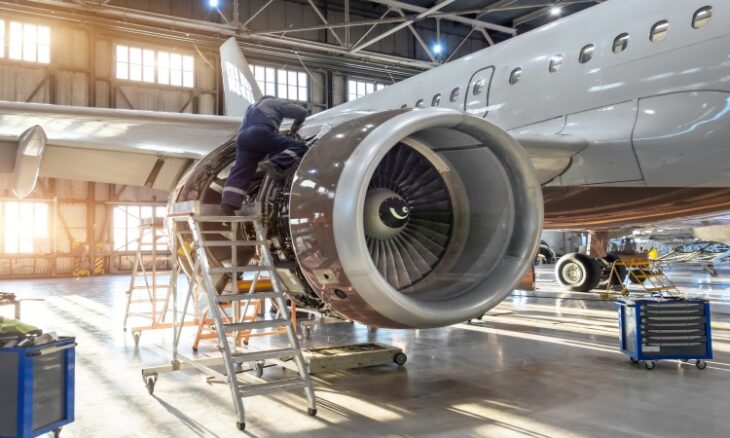
NASA has unveiled eight student teams as finalists in its 2026 Gateways to Blue Skies competition, directly challenging them to create practical, actionable solutions for today’s aircraft maintenance, repair, and overhaul demands.
The competition, titled RepAir: Advancing Aircraft Maintenance, focuses on practical solutions intended to improve maintenance processes within the next decade. Running in stages from the initial announcement of finalists in 2024 through final presentations in 2026, the contest is structured in multiple phases. This initiative aligns with industry needs, as the aviation sector faces a technician shortage and increased demands to maintain ageing, complex aircraft.
The shortlisted concepts span robotics, artificial intelligence and augmented reality, with several proposals progressing beyond conceptual models into early-stage systems. The competition has been structured around operational relevance, with a stated aim of improving efficiency, safety and cost reduction in aircraft maintenance by around 2035.
South Dakota State University is represented by three shortlisted concepts: WINGMAN, S.P.A.R.K. and S.P.I.D.E.R. Each approach tackles aircraft maintenance from a different perspective, focusing on reducing time, labour requirements, and uncertainty in inspection and servicing processes. The range of proposals shows a broader shift in maintenance practices, in which tasks are increasingly treated as linked processes that can be supported or enhanced by technology.
One proposal includes a six-legged robotic platform designed for aircraft surface maintenance. Using a hexapod configuration, the system moves across the aircraft exterior by attaching directly to the airframe and navigating curved surfaces while retaining stability. It is designed to perform controlled surface work, including corrosion removal, without requiring scaffolding, disassembly, or extensive manual access. This approach enables maintenance activities to be performed directly on the aircraft structure, reducing downtime, labour intensity, and operational disruption.
The WINGMAN concept introduces augmented reality safety glasses designed to support technicians during maintenance tasks. The system incorporates a display, microphone, and onboard controls, allowing users to access instructions, retrieve technical data, and navigate procedures without leaving the work area. Step-by-step guidance is presented within the technician’s field of view, cutting reliance on manuals and external devices while improving consistency in maintenance workflows.
A third concept, S.P.I.D.E.R. (Surveying Platform and Inspection Device for Enclosed Regions), addresses inspection of confined or hard-to-access areas within aircraft structures. The system is intended to navigate enclosed spaces with limited human access, providing inspection capability without extensive disassembly.
Finalist teams and concepts include:
- Embry-Riddle Aeronautical University/Cecil College (Smart Mechanic Glasses),
- Manhattan University (Aircraft Enhanced Resilience along with Intelligence Systems),
- Michigan State University (Surface Evaluation Network for Tethered Inspection and Nondestructive Evaluation),
- South Dakota State University (S.P.I.D.E.R)
- South Dakota State University (WINGMAN)
- South Dakota State University (S.P.A.R.K.)
- University of California, Irvine (Aircraft Structural Health Intelligence for Evaluation and Lifecycle Detection)
- University of Maryland Eastern Shore (APU Sentinel).
Each of the eight finalist teams has been awarded $ 9,000 and will advance to Phase 2 of the competition. The next stage requires the submission of a final paper, an infographic, and a formal presentation.
The competition will culminate at the 2026 Gateways to Blue Skies Forum on 18 May at NASA’s Langley Research Centre in Hampton, Virginia. This event will serve as the final phase of the contest and will be livestreamed.
Winning team members will receive NASA Aeronautics internships. The program ties student innovation directly to real-world maintenance issues, building workforce skills through practical solutions.